Monthly Archives: August 2012
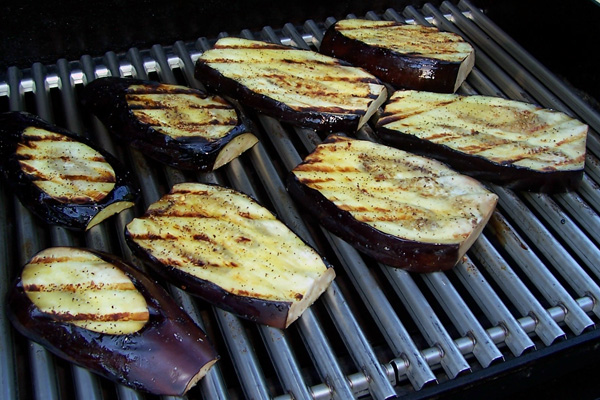
Grilled Eggplant
A recent request got me to looking through my collection for a simple, tasty approach to eggplant in the summer. I like this one, served with thick slices of Jersey tomatoes that have been drizzled with good olive oil and fresh-chopped oregano.
BASTING SAUCE:2 minced garlic cloves
2 tbsp. minced fresh parsley
2 med. eggplants
2 tsp. salt
1/4 c. chopped fresh basil
3/4 c. olive oil Combine all ingredients for the basting sauce and let stand for one hour.While the oil is standing, slice the eggplant crosswise into 1/2 inch slices. Arrange the slices in one layer on a large rack set over a tray and sprinkle them with half the salt. Turn the slices, sprinkle with remaining salt and let drain, turning them once for one hour. Pat the slices thoroughly dry with paper towels. Brush one side of each slice with the basting sauce and grill the slices, oiled side down on an oiled rack set 3 to 4 inches above glowing coals. Grill for about 3 minutes per side. Brush with more oil and turn them. Grill for about 3 to 4 minutes more or until they are browned and tender. Transfer grilled slices to a platter. Drizzle with a small amount of any remaining oil. Sprinkle with ground pepper to taste. Chill the eggplant, covered, for at least 4 hours or overnight. Serve them cold or at room temperature as a salad or appetizer with sliced French bread.
Key Lime Bars … Best Dessert EVER!
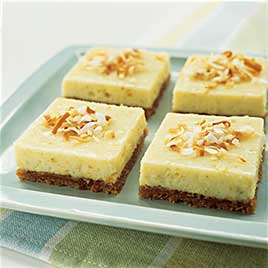
Those of you who are regular readers know of my specific love of all things Key Lime–comes from my years in South Beach and of making those magnificent Key lime pies for that famous restaurant down beach. If you are new to the site, check out my very first post, all the way back at the beginning.
So, what is the Key lime treat today? I subscribe to Cook’s Illustrated (which is in my opinion the best cooking publication on the planet), and get emails from them highlighting new, fabulous and thoroughly tested recipes from their test kitchen. I got this recipe from them, emailed to me, with an attached video showing how they are made. Given my love for Key lime products, I gave them a try. Voila! The best Key lime dessert I have ever tasted! Bar none (get it?).
I made these bars for an outdoor gathering of Ellen’s book group last summer. She tasted one bar and told me I could NOT give one single bar to anyone else. That’s how good they are. She also insisted that I never, ever, make them again. We almost finished them in one sitting.
So I am presenting to you here, the most fabulous bar cookie recipe I have ever tasted, that I have ever made. I will never make them again. (HAR!)
.
The recipe uses a crust made from, of all things, animal cracker crumbs. i’f you’ve not tried an animal-cracker crust, try it, and you will discover a rare treat that will change the way you view crumb crusts forever. The only quibble I have with the original recipe is that they suggest real Key limes, and if they are not available, use regular limes. I can say from personal experience that: a) Key limes are a pain to work with, b) they are hard to find and expensive, c) you need too many to make the recipe, and d) the recipe is actually easier and, frankly, better, if you use a half and half blend of fresh lime and fresh lemon juice. The blend of juices perfectly reproduces the combination of sweet, sour, and tart of Key limes.
This recipe is adapted from the July 1, 2006 edition of Cook’s Illustrated, and the video is available at their web site, http://www.cooksillustrated.com. You must be a paying member to see the video, but I promise that this recipe alone is worth the price of admission. I’ve recommended this site before, and I stand by my recommendation. I don’t like very many subscription sites, but Cook’s Illustrated is an exception.
Key Lime Bars
Start with a half-and-half blend of regular (Persian) lime and lemon juices. Do not use bottled lime juice. Grate the zest from the 1 lime before juicing it (2 if you’re doubling the recipe), avoiding the bitter white pith that lies just beneath the outermost skin. The optional coconut garnish adds textural interest and tames the lime flavor for those who find it too intense. The recipe can be doubled and baked in a 13- by 9-inch baking pan; you will need a double layer of extra-wide foil for the pan (each sheet about 20 inches in length) and should increase the baking times by a minute or two.
Ingredients
| Crust | |
| 5 | ounces animal crackers |
| 3 | tablespoons packed brown sugar (light or dark) |
| 1 | pinch Kosher salt |
| 4 | tablespoons unsalted butter , melted and cooled slightly |
| Filling | |
| 2 | ounces cream cheese , room temperature |
| 1 | tablespoon grated lime zest , finely minced |
| 1 | pinch Kosher salt |
| 1 | (14-ounce) can sweetened condensed milk |
| 1 | egg yolk |
| 1/4 | cup freshly squeezed lime juice |
| 1/4 cup freshly squeezed lemon juice
Garnish (optional) |
|
| 3/4 | cup sweetened shredded coconut , toasted until golden and crisp |
Instructions
- 1. Adjust oven rack to middle position and heat oven to 325 degrees. Cut about 12-inch length extra-wide heavy-duty foil; fold cut edges back to form 7 1/2-inch width. With folded sides facing down, fit foil securely into bottom and up sides of 8-inch-square baking pan, allowing excess to overhang pan sides. Spray foil with nonstick cooking spray.
- 2. TO MAKE THE CRUST: In workbowl of food processor, pulse animal crackers until broken down, about ten 1-second pulses; process crumbs until evenly fine, about 10 seconds (you should have about 1 1/4 cups crumbs). Add brown sugar and salt; process to combine, ten to twelve 1-second pulses (if large sugar lumps remain, break them apart with fingers). Drizzle butter over crumbs and pulse until crumbs are evenly moistened with butter, about ten 1-second pulses. Press crumbs evenly and firmly into bottom of prepared pan. Bake until deep golden brown, 18 to 20 minutes. Cool on wire rack while making filling. Do not turn off oven.
- 3. TO MAKE THE FILLING: While crust cools, in medium bowl, stir cream cheese, zest, and salt with rubber spatula until softened, creamy, and thoroughly combined. Add sweetened condensed milk and whisk vigorously until incorporated and no lumps of cream cheese remain; whisk in egg yolk. Add lime and lemon juice and whisk gently until incorporated (mixture will thicken slightly).
- 4. TO ASSEMBLE AND BAKE: Pour filling into crust; spread to corners and smooth surface with rubber spatula. Bake until set and edges begin to pull away slightly from sides, 15 to 20 minutes. Cool on wire rack to room temperature, 1 to 1 1/2 hours. Cover with foil and refrigerate until thoroughly chilled, at least 2 hours.
- 5. Loosen edges with paring knife and lift bars from baking pan using foil extensions; cut bars into 16 squares. Sprinkle with toasted coconut, if using, and serve. (Leftovers can be refrigerated up to 2 days; crust will soften slightly. Let bars stand at room temperature about 15 minutes before serving.)
Step-by-Step
Building Key Lime Bars
 1. Line pan with foil sling, then coat with cooking spray.
 2. Press crumb mixture firmly and evenly into pan.
 3. Pour filling into prebaked crust and spread into corners.
Are you growing your own herbs?

Are you growing your own herbs?
The foundation of any good kitchen is the tools and supplies you have on hand that find their way into all the cooking that you do. This includes knives, pots and pans, basic condiments–salt, pepper, garlic, ginger, ketchup, mustard, mayonnaise–and the basic ingredients you use on a regular basis.
This includes, of course, herbs and spices.
Spices I will leave for another discussion, but what I’m about here is herbs. The ones you use all the time, and maybe don’t even think about until either a recipe calls for a teaspoon of dried cilantro or dill or oregano, you reach for the little bottle in the cupboard by the stove and there’s not enough for the recipe. Do you know where your thyme came from? Your oregano? Your sage? Did they ride in a truck for hours? How many gallons of diesel fuel did they use? Were there pesticides on them? Were they washed? What do you really know?
I say, grow your own. Many of you probably do, and if so, you know that there’s not much better than whipping up a quick mushroom and cheese omelette and snipping a few chives to complete the dish. Homemade marinara with fresh parsley and basil? A snap, and so much better than store-bought.
Growing your own herbs is: a) simple; b) cheap; c) delicious; d) interesting–there are so many varieties of herbs to try, just sticking to the basics; we’ve grown three or four different basils and at least three different thymes; and e) rewarding–both in the sense of pride you feel from adding homegrown ingredients to your food, and for the compliments you’re likely to get from company who don’t know why that red sauce tastes better, but it does.
People who do their own herbs do it in all kinds of ways–herb-garden window boxes, and setting up a section of their vegetable garden are common. We grow ours in pots outside our kitchen door. A little water every day or two in the summer–not too much, herbs like to be a bit on the dry side– and a little advance planning, and you won’t be buying expensive little bottles of herbs at the grocery store any more. Where do those herbs come from anyway?
Grow any herbs you like, most will flourish here and where you live if you provide just a little bit of care. The real trick to successful herb gardens is to harvest often. Don’t let the herb plants get too big. Like any other plant, the more you prune the bigger the plant will get, so prune them often. Cut herb plants back frequently–usually when they outgrow the perimeter of the pot or when they look just a little out of control in the garden. Cut a large bunch, tie them up with string and hang them in a warm, dry, dark place–I do it in my garage–and forget about them for about three or four weeks. When they are dry to the touch and crumble easily, place the dried bunch in a large steel mixing bowl and crumble them to bits. Pick out and discard the stems and pour the dried leaves into nice little herb bottles you got at the dollar store or saved from when you ran out of thyme (get it?).
We grow thyme, oregano, basil, parsley, sage, cilantro, chives, and mint (actually, our mint is out of control in the backyard, but it grows really well in pots). We harvest them for dried herbs to use in the winter, but here’s an added bonus: if you grow them in small pots, bring them into the house in the fall and keep them as house plants and keep harvesting. What I’ve discovered, however, is that in spite of recommendations to the contrary, most herbs overwinter very nicely in a garage. Simply put the pots on a shelf in a cold (but not freezing) garage, near a window if you have one, give them a little water about once every two weeks, and in the spring after the freeze is gone, most of them will come back, usually even stronger. I haven’t done this with basil–we use enough basil all year long that I try to keep a pot of basil growing in the kitchen– so I’m not sure how that overwinters. Or, you can just let the basil go in September, harvest a bunch just before the first freeze, and make a load of pesto, for home use or for holiday gifts.
Fresh and local. What could be better?
Zucchini-Parmesan Risotto
Lancaster Sunday News for June 27. Zucchini-Parmesan Risotto, and what a dish!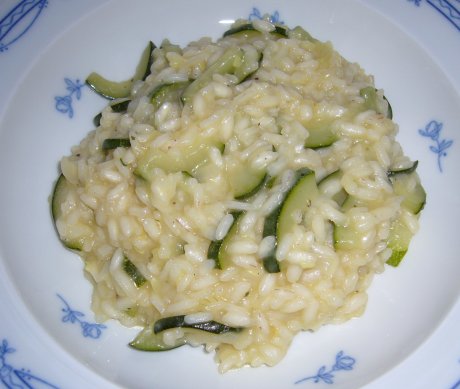
I went out to our backyard garden the other day to discover that my first zucchini of the season was ready for picking, and in this house, that means it’s time for…
Comfort food, summer style.
When I mention comfort food to the kids they immediately think of macaroni and cheese. I liked it too when I was a kid, but now I’m an adult, and I’ve come across a grown-up rendition of this classic, one that tickles my comfort-food fancy, and is garden-fresh and healthy to boot.
What we’re serving up today is a creamy, cheesy side-dish delight, zucchini-Parmesan risotto topped with a wonderful tomato and olive compote. You probably think that risotto is time-consuming, difficult to make, and even harder to make right. Think again. It takes about the same time, start to finish, as the kids’ favorite, but is so much more satisfying.
The recipe is driven by the appearance of home-grown, garden-fresh vegetables–you may be seeing tomatoes if you planted early–but the local farm markets are already serving up the goods in plentiful amounts. And for those red-meat eaters in your house, it is a perfect complement for steaks on the grill, an ultimate summer comfort-food plateful.
Here’s what you do:
Ingredients:
Risotto
2 tablespoons olive oil
1 cup minced onion
2 garlic cloves, minced fine
¾ cup uncooked Arborio rice
½ cup white wine
½ teaspoon salt
2 – 2 ½ cups vegetable broth, kept at a low simmer
1 medium zucchini, grated (about 1 ½ cups)
2/3 cup grated Parmesan cheese
fresh ground pepper to taste
Tomato Compote
3 ripe plum tomatoes, seeded and chopped
½ cup minced onion
15 pitted Kalamata olives (optional)
¼ cup fresh basil leaves, chopped
salt and fresh-ground pepper to taste
To make the risotto, heat a large, heavy pot (preferably enamel) and 1 tbsp. olive oil over medium-high heat. Add 1 cup onions and saute’ until they soften, about 5 minutes. Add the garlic and rice and saute’, stirring, about 2 minutes. Add the wine and salt and cook and stir until the wine has almost evaporated. Add ½ cup broth and let the rice cook, stirring frequently, until the broth has been absorbed, then add another ½ cup broth and continue stirring. When the rice has been cooking for 10 minutes, add the zucchini and stir to combine. Each time the broth is almost completely absorbed, add another ½ cup, until the broth is gone, or until the rice is tender but still a little chewy, about 25-30 minutes. Remove the risotto from the heat, add the Parmesan cheese and fresh-ground pepper, stir well and cover. Let the pot rest about 10 minutes before serving. It will thicken a bit more.
While the risotto is resting, make the tomato compote. Heat a pan medium high with 2 tbsp. olive oil, and then add the chopped tomatoes. When the tomatoes are hot, add the minced onions and saute’ about 1 minute. Remove the pan from the heat and add the olives, basil, salt and pepper, and mix well. Serve the risotto with a dollop of tomato compote, and garnish with grated Parmesan and fresh basil leaves, sliced into julienne strips.
For a snazzy presentation, transfer the risotto to a bowl and chill for ½ hour. Then divide the risotto and shape into six pancakes, about 1 inch thick. Heat 2 tablespoons olive oil in a heavy skillet over high heat, turn the heat down a bit and sear the cakes about 3-4 minutes on each side, until they are nicely browned. Serve the risotto cakes topped with compote, cheese, and basil garnish.
If you’re not a fan of marinated olives, make the compote without them. My kids like the dish almost as much as they do their favorite mac and cheese, but they prefer it without the compote topping. It’s still a fabulous dish that veritably screams: “COMFORT FOOD!”
The recipe comes courtesy of Didi Emmons’ classic Vegetarian Planet. If you’re interested in experimenting with different and delicious vegetable dishes, it’s one you ought to have on your kitchen bookshelf.
Grilled Pork Tenderloin with Rhubarb Chutney
Rhubarb. It’s one of the most maligned and misunderstood vegetables in the garden. A showy, broad-leafed, and colorful addition to a home garden, it remains, 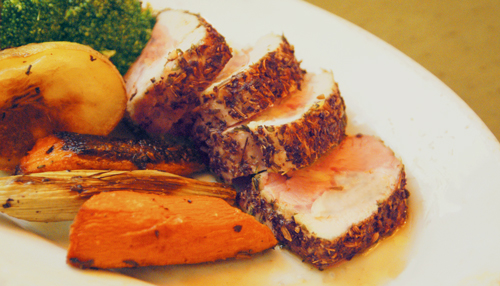 nevertheless, a vegetable that draws scrunched-up faces from adults and children alike. And, likely, memories of an oh-so-gooey strawberry-rhubarb pie, loaded with sugar and cornstarch and topped with a soggy crust. Edible in the right setting, but all-in-all, pretty bland.
I want to celebrate rhubarb’s tart taste, not disguise it. And as the days grow warmer, the kitchen grows hotter. So we grill. Grilling and summer go together like…uh…meat and fruit.
Meat and fruit? Yin and Yang. I love to find sweet and tangy sauces and glazes to brush onto grilled roasts, so I recently experimented with a recipe for rhubarb chutney, used as a cooking glaze for grilled pork. Chutney, if you aren’t familiar with it, is a blend of fruits, spices, and an acidic preservative–usually vinegar or citrus juice. Because rhubarb is at its seasonal peak right now, a tangy glaze for a grilled roast feels exactly right. And, you can get it at almost any farm market or roadside stand.
Try this grilled pork tenderloin with rhubarb chutney. Make the chutney a day ahead so the flavors have time to marry; it will take about 30 minutes, start to finish.
Rhubarb Chutney:
1/2 cup light brown sugar
1/3 cup balsamic vinegar
1 tablespoon peeled fresh ginger, minced (Or, keep a jar in your refrigerator to make life easier!)
2 cloves fresh minced garlic
1 teaspoon cumin
1/2 teaspoon ground cinnamon
1/2 teaspoon ground cloves
1/4 teaspoon dried crushed red pepper (or try chipotle chile pepper)
4 cups 1/2-inch cubes fresh rhubarb (about 1-1/2 pounds)
1/2 cup (generous) chopped red onion
1/3 cup dried cranberries, dried tart cherries, or chopped dried apricots (about 2 ounces)
The day before serving, combine the first 9 ingredients (sugar thru red pepper) in a heavy 2-quart saucepan. Bring to simmer over low heat, stirring until the sugar dissolves. Add the rhubarb, onion and dried fruit; increase heat to medium-high and cook and stir until the rhubarb is tender and the mixture begins to thicken, 7 to 10 minutes. Cool completely. Cover and chill overnight, then bring it to room temperature before using, and separate into two containers, one for basting and one for the dinner table.
Pork Tenderloin:
2 pork tenderloins (about 1-1/2 pounds total), trimmed
2 teaspoons ground cumin
1 tablespoon kosher salt
1/2 teaspoon black pepper
1 tablespoon olive oil
Fresh cilantro sprigs (optional)
Brine:
1 gallon water
1 cup kosher salt
1/2 cup light brown sugar
10 whole peppercorns
First thing in the morning on the day you want to serve the dish, make the brine in a container large enough to hold the meat, and stir until the salt and sugar dissolve. Place the pork in the brine, cover and refrigerate until cooking time.
In the afternoon, preheat the grill. While the grill heats, remove the pork from the brine, and pat dry. Discard the brine. Rub the tenderloins with cumin, salt and pepper. Heat the oil in large heavy skillet over high heat, then add the pork and brown on all sides, about 5 minutes. Transfer to the grill, and brush the pork with some of the chutney. Close the grill lid and roast, turn the meat once and brush with more chutney, about 15-20 minutes, until a thermometer reads 155-degrees internal temperature. Remove the tenderloins from the grill and wrap in heavy foil for 10-15 minutes. Slice into medallions, serve over roasted-garlic couscous, garnish with cilantro sprigs, and serve the remaining chutney as a condiment.
Since I’m married to a woman who steadfastly refuses to eat mammals, we substitute turkey tenderloin for the pork and grill it until the internal temperature reads 175 degrees, about 20-30 minutes, then wrap it loosely in foil for 10-15 minutes. The rhubarb chutney also works well as an accompaniment to chicken, duck or lamb. Try it the next day on a sandwich made with the leftovers for an added treat.
Thal Brothers’ Epicure Market–Where I learned…

Turkey and Black Bean Chili
Okay, here’s another chili recipe. I seem to be in a chili state of mind right now, and before I’m through, I may exhaust the forms of chili I create. My personal favorite is a 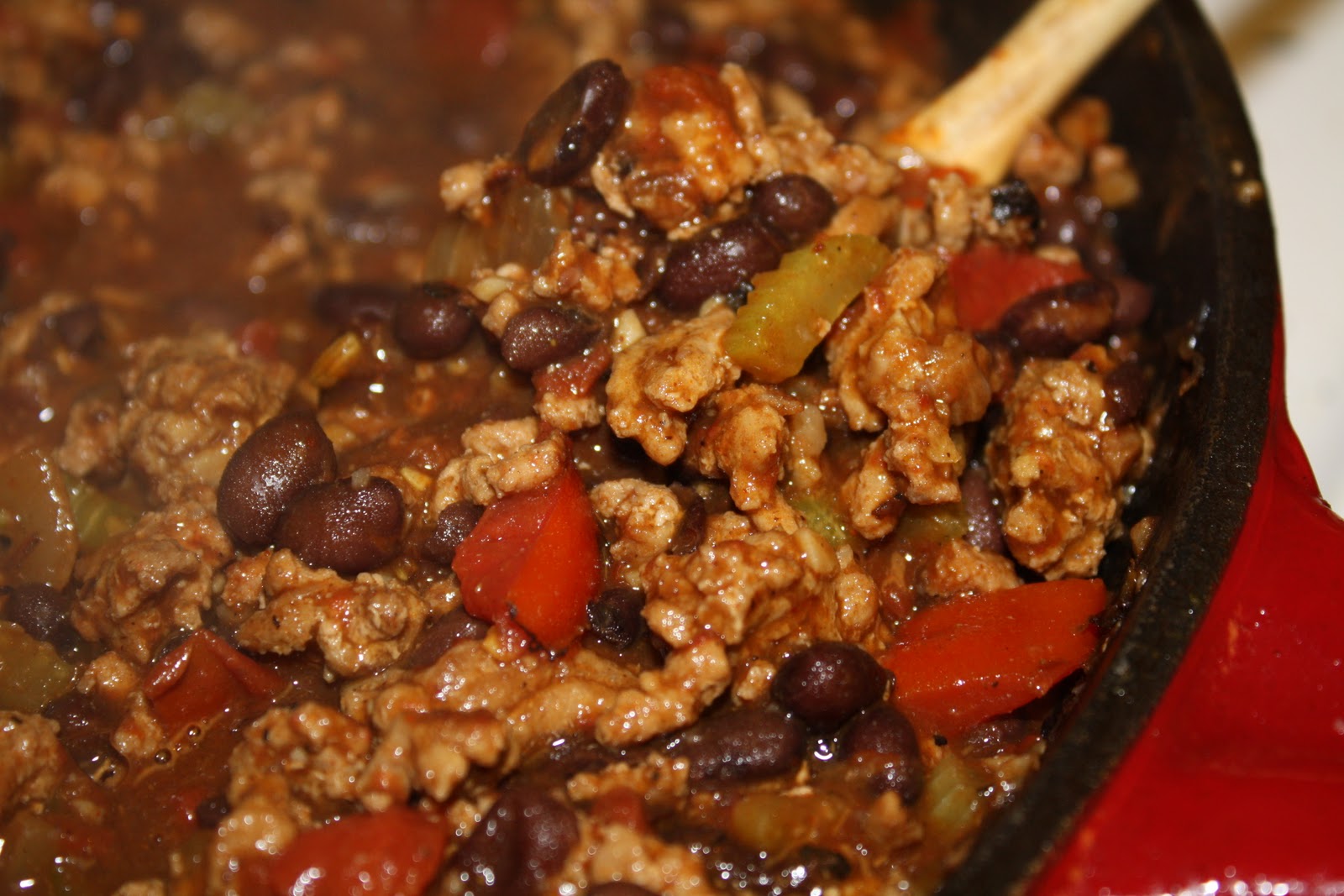 Tex-Mex-style chili with no beans and shredded beef with beer and tequila and about five different kinds of peppers.
But that’s not what this one is about.
This here is chili my family likes to eat–the rest of my family is of the female persuasion, two-thirds of whom are under twelve. And while my incredible partner will on occasion partake of spicy food, she actually prefers to opt for flavor over heat. And, I learned years ago from my cooking mentor, a grisly, old Filipino chef of remarkable skills and talent beyond description, any fool can make food blazing hot. That takes no skill, only lots of hot peppers and an oversize ego. Only a great cook can make very hot food that tastes even better than it burns.
So with that in mind, here’s a chili that is gently spicy, but that my young daughters could still eat. After all, what’s the point of making food for dinner that no one will eat?
TURKEY AND BLACK BEAN CHILI
Ingredients:
2 Tbsp. olive oil
2 Tbsp. canola oil
1 1/2 pounds 93/7 ground turkey
6 cloves garlic, minced fine
2 medium sweet (like Vidalia) onions, chopped medium
2 Tbsp. chili powder
2 Tbsp. ground cumin
2 Tbsp. Mexican oregano
2 Tbsp. kosher salt
1 tsp. freshly ground black pepper
1 tsp fine-ground white pepper
8 oz. mild salsa
8 oz. medium salsa
1 bottle Mexican beer
4 oz. good tequila (NEVER, EVER USE CHEAP SPIRITS IN COOKING)
2 pounds skinned, diced tomatoes (I use fresh San Marzano tomatoes I grow and freeze. This equals 2 16-oz. cans)
4 1-pound cans black beans, one mashed completely to a paste.
1 4-ounce can diced green chiles
Fresh cilantro for garnish
Procedure:
1. Heat an enamel-coated heavy pot over medium-high heat about seven minutes, add half each oil, then
immediately add 4 cloves garlic. Stir until the garlic JUST begins to brown.
2. Add the turkey and saute until all the pink is gone, using a cooking spoon to chop the turkey to bits as it cooks.
Then drain the meat while you…
3. Add the rest of the oil and the onions. Reduce the heat to medium and saute the onions until they begin to
soften, about 5-6 minutes. Then add the chili powder, cumin, oregano, salt and black and white pepper. Saute
another 3-4 minutes, incorporating the spices into the onions. Add back the ground meat and mix well.
4. Add the beer and the tequila to the pot, reduce the heat and simmer until the liquid is reduced by 2/3.
5. Add both salsas to the pot. Here is one place where you can adjust the heat more to your liking: If you like your
chili hotter, use all medium, or half medium/half hot, or all hot, or all mild, whichever you wish. It’s a good place
to adjust the heat without affecting the flavor. If you try to add cayenne pepper or hot sauce here, you’ll louse
up the flavor. Be careful at this point. Blend the ingredients well.
6. Add the tomatoes and the whole beans and simmer for 30 minutes. Then add the mashed beans, mix well and
simmer another 30 minutes.
Adjust your salt and pepper to taste. Garnish the chili in a serving bowl or crock with fresh-chopped cilantro.
Serve with bowls of salsa, chips, shredded cheese (pepper-jack is an excellent choice), sour cream, chopped
scallions, saltines, or any other garnish of your choice.
I find that placing bowls of different salsas on the table is an excellent way to give folks choices of heat in their
chili. It is my opinion that everyone’s taste in chili differs, and it serves a cook better to give his or her guests
a choice rather than imposing one level of heat to everyone. The point is to have people enjoy the taste of the
food, not to ooh and ahh your ability to burn their insides.
Meyer’s Memorable Chili
I haven’t yet put up a chili recipe. I don’t have one that I love enough to stick with, but rather make it up as I go along. I almost always put a bottle of Mexican beer, a few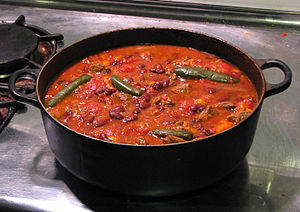 ounces of tequila, and a couple of tablespoons of unsweetened cocoa in my chilis.
But I found this recipe on a website dedicated to the late crime novelist, John D. MacDonald, whose Travis McGee series I am currently in the middle of reading. For those who are interested, MacDonald’s Travis McGee is about the best serial character I’ve run across in mystery fiction–I’ve come to like him more than Spenser or Jesse Stone, Robert B. Parker’s crime heroes. If you’re interested, check out http://www.home.earthlink.net/~rufener/, and read through the site. If you like hard-boiled crime fiction, this is some of the best.
Travis McGee’s best friend and next-boat-berth neighbor is Meyer, a renowned economist and goldmine of knowledge and insight. With these two characters, the author manages to find a way to say whatever he wants about humankind and the state of the world.
When the urge came upon Meyer he would create a pot of his famous tears-and-gasps-inducing house specialty. It was said to be never the same twice, and not for the faint of palate. Since MacDonald gave us neither a recipe nor helpful hints, we’ll have to make some reasonable assumptions, just as Meyer himself would do in other situations when there were knowledge gaps to be plugged with logical guesses.
There are many versions of Proper Chili, depending on which fanatic is holding forth. Meyer’s chili philosophy would probably favor the relaxed and practical approach – concoct something plentiful and tasty from cheap available ingredients. Never mind those chili-competition semi-pros with their theological arguments over The Current Culinarily Correct Ingredients, such as: “are beans permissible?”, “are tomatoes taboo?”, or, “must the meat be hand cut instead of ground?” and so on.
We are not sure how Chili Con Carne originated, but of the several theories, here is the one that would probably sound right to Meyer. On those long-ago cattle drives to the distant railhead, there would be a chuckwagon with a Mexican cook. They’d select one of the animals and butcher it to feed the crew. Then they would eat their way through the carcass day after day. As the better parts were consumed, the remainder got covered with herbs and spices to keep the flies off and prevent mold. Nearing the end of the trail, there would be just funny little ends of meat left, and of course dried beans and onions and chiles, and all of this went into the pot to make the final meals.
Here is the sort of recipe Meyer might have carried around in his head, ready to be put to use in the galley of his cabin cruiser. First, get out a big pot with a lid. It ought to be heavy cast-iron for both browning and simmering, and ideally the iron should be porcelain-coated. The coating prevents rust while the chili rests overnight, as all good chilis should, to mellow the flavors. If there is room on the galley stove for a second pot, you can cook your own beans and add them whenever they’re done, otherwise canned ones will have to do. Now for the formula (all measurements are casual).
3-3-3-3 CHILI (serves 9-12)
Brown in oil or baconfat
3 lbs. ground or chopped meat (any kind)
3 largish onions, chopped
- Add the following and simmer for about 2-1/2 hours:
3 lbs. tomatoes (fresh or canned, including juice)
3 lbs. canned beans, pinto or red, drained (or cook 1 lb dry beans)
1, 2 or 3 hot chiles, chopped – for normal, hot, or Meyer-strength
1/3 cup regular chili powder mixture (e.g. Gebhardts or Grandmas)
1 tablespoon cumin - 1 tablespoon paprika (adds color)
2 commercial bay leaves, or 1 wild one - any optional ingredients (see list)
and of course, salt and pepper - (Here are some optional ingredients)
2 or 3 chopped bell peppers, preferably red (highly recommended)
substitute V-8 juice or bloody mary mix for some of the tomatoes
1 or 2 carrots, peeled and shredded
1 or 2 big stalks celery, chopped
raw Mexican-style chorizo
beer or wine for thinning
cornmeal for thickening
vinegar and sugar for more tang
After cooking, refrigerate overnight, remove hardened fat, and reheat.
Before serving, stir in and cook 2 minutes longer:
4 cloves garlic, pressed
1 bunch cilantro, chopped (optional)
Chili is good with toasted garlic bread or warm tortillas. It’s even better with guacamole accompanied by veggie dippers and corn chips.
WARNING: Do not use kidney beans or tomato soup! These are the trademark of the school cafeteria cook! Also, for the customers who don’t think it’s fiery enough, set out Mexican hot sauce, not Tabasco.
Spicy Tomato Bisque With Croutons
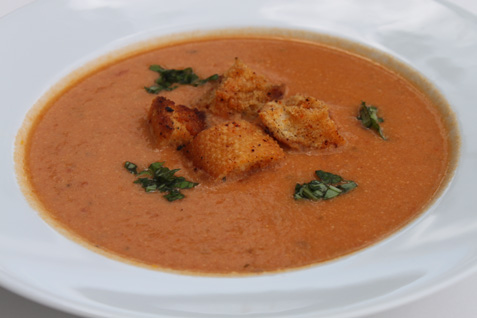
One of the funny, ironic things about cooking and gardening is that some of the best stuff you can grow in the summer and early autumn makes for wonderful–but out of season–soups and stews that are best made in January and February. To this end, we have taken to growing more tomatoes than we could possibly use in the summertime, and freezing them for use all winter. I grow several varieties, some heirloom, some production-grade, and some eating and slicing tomatoes. Last year we grew Amish Paste and Brandywine red heirlooms, several Roma plants, One Better Boy (famous as the legendary “Jersey” tomatoes, and a couple of grape tomato varieties.
Our plan for this is to pick tomatoes every day, and when we have enough to fill a 9×13 roasting pan, we make a batch for the freezer. We do it on an outdoor grill whenever possible. To do this, preheat the grill to 350 degrees; wash and stem the tomatoes; place them in the pan, stem side down, cut a small “X” in the end pointing up, place a couple of sprigs of fresh basil on the tomatoes, and spray them lightly with olive oil spray. Roast the tomatoes uncovered on a covered grill for 45 minutes, then cover them with foil and allow them to cool to the touch. When cool, pour off any standing water from the pan, being careful not to pour off any tomato juice. Remove the skins from the pan and toss them in the compost pile, and bag the tomatoes in 1-qt. freezer-type ziplock bags, about 1 pound per bag (you ought to get three to four bags from each pan of roasted tomatoes), and place them in the freezer.
The recipe for this post is for an absolutely amazing spicy tomato bisque that will stick to your imagination for weeks after you’ve made it and eaten it. You’ll need two big pots, but the result is well worth the cleaning time. Here goes:
SPICY TOMATO BISQUE
Ingredients:
2 pounds fresh or home-frozen tomatoes
1 medium sweet onion
1 Tbsp. good imported paprika (I use Hungarian, but Spanish Paprika is also wonderful. Just use a really good one).
2 Tbsp. lightly-salted butter
1 bay leaf
2 Tbsp. dark brown sugar
1 tsp. ground allspice
2 tsp. Kosher salt
1/2 tsp. fine-ground white pepper
2 tsp finely chopped fresh basil
1 cup light cream
1 cup milk
2 Tbsp. all-purpose flour
2 Tbsp. unsalted butter
1 cup shredded pepper-jack cheese
freshly toasted croutons
fresh chives chopped fine for garnish
Procedure:
1. SLOWLY (!) caramelize the onion and Paprika in the salted butter until they are soft and deeply golden brown.
2. While the onions are cooking, strain the tomatoes through a food mill to remove the seeds.
3. Add the tomatoes, bay leaf, brown sugar, allspice, salt, pepper, and basil to the onions, bring to a boil, then reduce the heat and simmer, stirring occasionally, until all the flavors marry, about 25 to 30 minutes, and then turn the heat off and remove the bay leaf.
4. In a second pot, melt the unsalted butter, then add the flour to make a roux, stirring constantly until the mixture just barely begins to brown. Add the cream and milk, mix well, and bring to a simmer. Add the tomato soup to the bubbling roux and stir well until the soup begins to thicken.
5. Ladle the soup in heavy stoneware mugs or bowls, top with a generous helping of pepper jack cheese, cover the cheese with five or six croutons, top the whole thing with a pinch of fresh chives, and serve immediately with a nice hot loaf of artisan bread.
This is a memorable soup that you will want to make over and over again, and is best using your own tomatoes. If you are going to use store-bought tomatoes, don’t use just one variety. Mix up some Italian plum and big slicing tomatoes for the soup. If you are going to use store-bought tomatoes, roast them first a day ahead or early in the day, and make sure to remove the skins. This is a lot of work, and is why I use my own roasted tomatoes.
This recipe will also be memorable with canned tomatoes IF you use San Marzano tomatoes. I’ve spoken of them before. They should be the only canned tomatoes you buy.
Try this recipe if you’re looking to make soup on a cold winter Sunday.
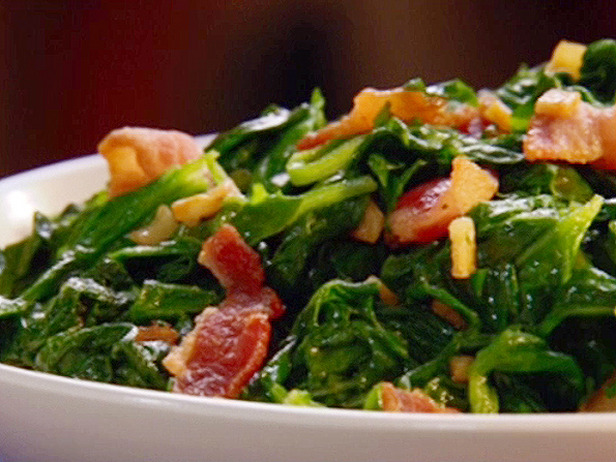
A Spinach Your Kids Will Eat!
Kids won’t eat their vegetables? Mine wouldn’t. Not my 26-year-old, not my 10-going-on-30-year-old, not my nine, either. What to do?
The answer came to me in the form of a challenge. When I was working as a line chef in the market in South Beach, the boss came in one day and challenged each one of us to come up with a totally new dish, unlike anything we’d been serving. One chef came up with completely new take on mac and cheese, another produced a remarkable hot-sour soup, and a third produced a recipe for Polynesian chicken that is still one of the faves in the market today, 35 years later (I’ll put that one up another time. I served it at my church when we made a welcoming dinner for the new ministers).
But I digress.
Vegetables. Ewwww……
What I produced was a sautéed spinach dish that had tons of garlic, a red-sauce reduction, prosciutto, fresh oregano, and Parmesan cheese, and the result was spectacular. I experimented at home, and kept working the recipe until my son, a devoted PB&J’er, not only ate a whole plateful, but asked for more, and requested that I put it in the regular rotation at home. A success!
It’s easy to make, and uses ingredients you likely have at home already. Except the spinach and the prosciutto. I’ve kept working the recipe, because good prosciutto is expensive and cheap prosciutto isn’t worth the price it commands. I’ve made it with pancetta, hickory-smoked bacon, back bacon, Canadian bacon—even turkey bacon. I find that to me it tastes best with pancetta, but I have found that turkey bacon is actually a pretty good substitution. And since we don’t eat mammals around here anymore, turkey bacon is the condiment du jour Also, because really good Parmesan is more valuable than oil these days, I’ve come to accept and use the shredded Parmesan cheese sold in bags in the refrigerator section. The package says 100% Parmesan. Really?
But if you really want to discover what the true gold tastes like, make it once with the true ingredients listed here—Parmesano Reggiano, pancetta or prosciutto, lightly chopped fresh oregano (you do grow your own herbs, don’t you? Why not? It’s too easy not to).
Here’s the scoop:
South Beach Spinach Milanese
Ingredients:
1 lb. fresh (and I mean FRESH!!) spinach, stemmed and deveined
1 slice pancetta or 2 thin slices prosciutto, chopped fine
4 cloves garlic, finely chopped
2 Tbsp. olive oil (use good oil for this recipe PLEASE!)
2 Tbsp. chopped fresh oregano (or 2 tsp dried)
2 Tbsp. chopped fresh basil (or 2 tsp. dried)
2 Tbsp. chopped fresh parsley (or 2 tsp. dried)
2 red plum tomatoes, seeded and chopped
1/2 cup shredded Parmesano Reggiano
Procedure:
1. Buy your spinach from a farm market. Thank goodness for the Stoners at Central Market. Wash it at least twice.
2. Make sure the spinach is as dry as possible. I wrap it in lots of paper towels and keep it in the fridge for 2 hours.
3. Chop the spinach leaves to about three-inch square pieces. Set aside.
4. Heat a wok or large heavy saute’ pan, add just a pinch of olive oil and the chopped pancetta, saute until crisp.
5. Add the rest of the olive oil and the garlic, saute the garlic for 30 seconds, then add the herbs. Saute 30 seconds more.
6. Add the chopped tomatoes to the pan and stir-fry just until the tomato moisture is reduced away.
7. Add the spinach to the mixture and toss well to coat with the ingredients already in the pan.
DON’T OVER COOK THE SPINACH HERE. ALL IT NEEDS TO DO IS WILT AND GET COATED WITH THE SAUCE.
8. Grind in some fresh black pepper, then add 1/4 cup Parmesan cheese and stir quickly to melt the cheese.
Plate the spinach and sprinkle the remaining cheese over the top.
Serve this immediately. And sit back and watch.
 Cheffzilla’s Kitchen