Category Archives: Uncategorized
Do You Like Rhubarb? You Will After This. Guaranteed

John wore a suit to work every day.
Right after high school, he had gotten a job as an office boy and went to college at night. He ended up in sales, working in buildings full of offices five days a week for the next 40 years.
He married at 22, was a father at 24 and had three children by age 30. He supported a family — a wife and three daughters — working hard and long, traveling often and being moved around by employers every three years or so: to Long Island, N.Y; New Hampshire; Syracuse, N.Y. (twice); Schenectady, N.Y; and Hummelstown. He put his three daughters through fine colleges.
When you look at photographs of this sales executive when he was young, images of the TV show “Mad Men” come to mind. But unlike the glamorous hijinks in the world according to Hollywood, John’s life was much more normal. On the weekends, he spent his time with family. He did chores around the house. And he baked. Sticky buns, cinnamon rolls, coffee cakes, cookies, fruit crisps. After all, what could be better than fresh baked goods made with butter and brown sugar?
So when John gave me a recipe for fresh rhubarb cake and told me that it was a wonderful, light, sweet confection, perfect for breakfast or dessert, I sat up and listened. After all, John knows cake. And now, retired in Landisville, John has been growing his own rhubarb almost from the time he and wife Barbara moved here in 1999.
And he’s still baking, almost every weekend. He makes cookies and brownies with his grandchildren, cakes and breads for family events and a large batch of Christmas stollen that is worthy of a story of its own.
Three years ago John gave me two rhubarb plants that he divided out of his own patch. They have been growing profusely in my garden ever since, one of my favorite harbingers of the new season. When the rhubarb pokes up through the ground, I know it’s time to get my vegetable garden ready.
Now it’s May, and on the tables at Central Market fresh rhubarb abounds, great piles of it at all the local fruit and vegetable stands. It’s at its peak for the next month or so, until it gets hot, so I’m constantly on the lookout for wonderful new ways to cook with rhubarb. (Got any great recipes? I’ll try ’em!)
Last season I ran one of my favorite rhubarb recipes, grilled pork tenderloin with rhubarb chutney (email me, and I’ll send it to you). So this year I’m baking a cake. But not just any cake. This is a fresh rhubarb cake that no less an authority than John — my father-in-law —calls “the best cake I’ve ever made.” We made one this weekend. We agree.
FRESH RHUBARB CAKE
1/2 cup butter, softened
1 1/2 cups brown sugar
1 egg
1 teaspoon pure vanilla extract
2 cups flour
1/4 teaspoon kosher salt
1 teaspoon baking soda
1 cup milk
1 tablespoon fresh lemon juice
2 cups coarsely chopped fresh rhubarb
1/2 cup chopped pecans
1/2 cup granulated sugar
1 teaspoon ground cinnamon
Cream the butter until light, then add the brown sugar slowly until the mixture is well-blended and fluffy. Beat the egg and vanilla into the mixture until well-blended.
In a separate bowl, sift together the flour, salt, and baking soda. Sift again.
In a separate container, combine the milk and lemon juice.
Alternate adding the dry ingredients and the milk mixture to the creamed butter, beginning and ending with the dry ingredients. Beat after each addition just enough to blend.
Gently fold the rhubarb into the batter. Pour into a buttered and floured 9-by-13-inch pan.
In a small bowl, combine the pecans, granulated sugar and cinnamon, and sprinkle evenly over the batter. Bake in a preheated 350-degree oven for 45 to 50 minutes (325 degrees for a glass baking pan).
Cool 30 minutes before serving.
Email Jeff Thal at talking.fresh@yahoo.com or visit his blog, talkingfresh.typepad.com/blog.
Read more: http://lancasteronline.com/article/local/395981_Rhubarb-recipe-is-a-piece-of-cake.html#ixzz1VwLextMP
The Best Cold Spinach Salad I Know
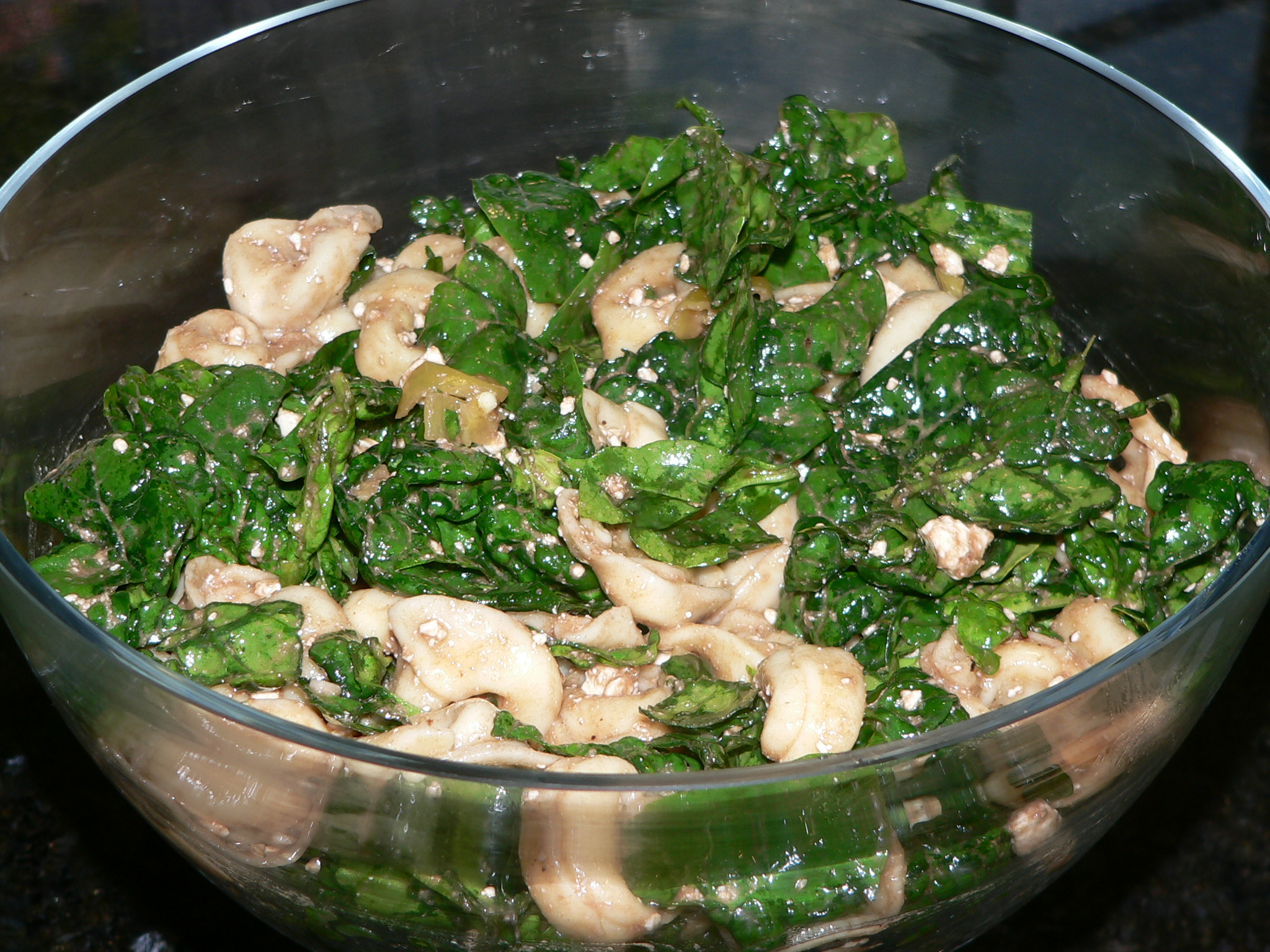
I have a weakness for cold pasta salads.
The really cool thing about cold pasta salads is that there are so many different pastas, veggies and salad dressings that one can literally invent a delicious cold pasta salad on the spur of the moment. Simply throw together your favorites, or boil up noodles, empty out your vegetable bin, add a dressing and voilà! Cold pasta salad. Your way.
There is no end to the variations of combinations one can try. The only limitation is finding what’s in season. Do you like cheese? Tacos? Peanut butter? (We’ve already been down this road.) Asian-influenced flavors? Anchovies? Asparagus? Doesn’t matter. If you like any of these, or if you have your own favorite flavors, simply whack them together, add your favorite dressing and go for it.
For fun, I Googled “cold pasta salad,” and the search came back with more than 1.3 million hits. In 1.5 seconds. I browsed through about 10 pages of the returns, and I have to admit that I couldn’t find a single one I didn’t want to taste. Try it yourself.
But before you do, set yourself some parameters for what you’re looking for and what you’re willing to add or leave out. I believe that the best way to judge a really good pasta salad is to determine how many of the major food groups you can stuff into a single bowl. Greens, proteins, fats and carbs, all in one bowl, is certainly the Holy Grail. Imagine a nice spinach and bacon salad with parmesan cheese and sweet vinaigrette. Or perhaps a grilled-chicken Caesar salad with croutons and a homemade dressing. Yum. Great for guests, great for families, great any time of the year.
On the other hand, they’ve been done so many times that, while certainly classic, something different and a little bit tangy with assertive flavors might be really interesting. Try this salad, using spinach greens, feta and cheese or spinach tortellini. It goes well with grilled steak, chicken or sausages, or it can stand alone as a cold dinner salad. I often take this salad when we are invited to an outing where someone says “bring a dish.” And maybe the best part is how easy it is to make. I am actually making the salad for supper tonight as I write this.
Local spinach is at peak season right now and is available at all your favorite markets. I buy mine at Elmer Stoltzfus’s (formerly John Stoner’s) vegetable stand at Central Market, but it’s available across the county. Right now the spinach is about the best it’s going to be all year. If you can find freshly made tortellini and feta cheese, even better. But any way you make it, this one will be a hit.
COLD SPINACH, TORTELLINI AND FETA SALAD
1 package fresh, frozen or dried tortellini
3/4 pound fresh spinach
4 ounces feta cheese, crumbled
3-4 peperoncini peppers in vinegar brine
4 tablespoons balsamic vinegar
4 tablespoons extra-virgin olive oil
1/2 teaspoon salt
1/4 teaspoon freshly ground pepper
Place tortellini in 4 quarts of boiling salted water and stir gently until the tortellini all float. Drain quickly and immediately plunge into ice water. Allow to cool completely.
Remove the stems from the spinach leaves and clean the spinach well in a large bowl of cold water, to remove any sand. You might need to rinse more than once. Then allow to drain and dry completely.
About two hours before serving, place the spinach, tortellini and feta cheese into a large bowl and toss. Add the oil, vinegar, salt and pepper, and toss to coat the ingredients completely.
Mince the peperoncinis, separate the seeds and place the minced peppers in the salad and toss to mix well.
Cover with plastic wrap and refrigerate until serving.
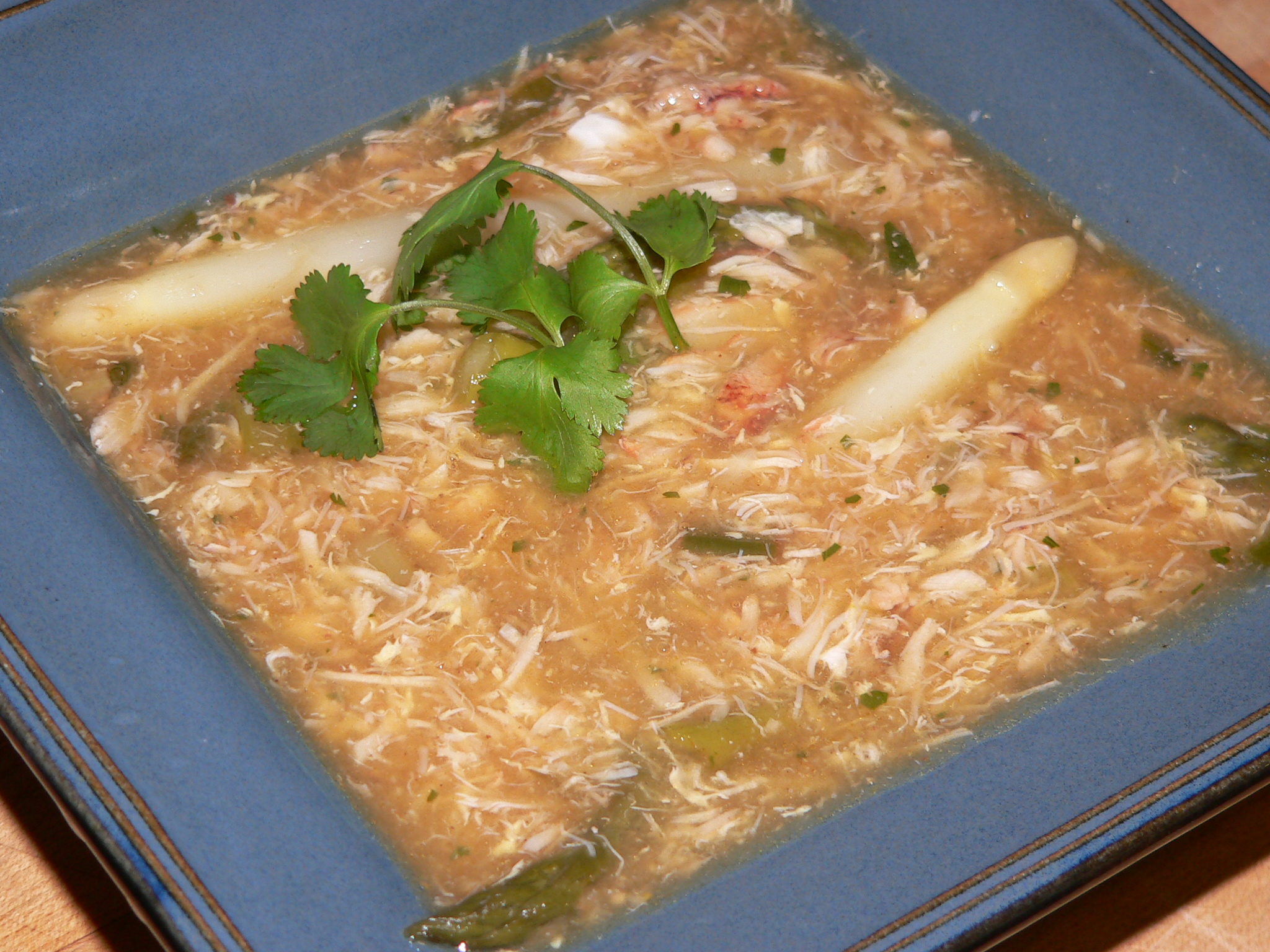
Hot, Sour and Tasty Crabmeat and Asparagus Soup
Strolling through Central Market the other day, I noticed a common thing in almost every fruit and vegetable stand —the fresh, locally grown vegetables are arriving. Rhubarb, spinach, scallions and spring onions, watercress and other herbs are beginning to appear at most of the farm stands, along with my personal favorite spring vegetable, asparagus.
Asparagus’ popularity goes back to the earliest times in recorded history. There is a recipe for asparagus in the oldest surviving recipe book, from the third century, and the vegetable is seen on an Egyptian frieze dating to 3,000 B.C.
Asparagus is low in calories and sodium and high in potassium, protein, fiber and vitamins A, C and E. There are studies linking asparagus to important health benefits. It is high in antioxidants and folate, which is critical for pregnant women and in the prevention of heart disease, and has been proven to help reduce the loss of calcium, which is important as people age.
So why is asparagus the ugly stepsister in the vegetable garden? Its appearance in the dining room has been known to send kids running and screaming in fits of apoplexy. One of my daughters worked herself into such a frenzy over asparagus on her plate that she sat crying at the dinner table, accusing us of child abuse, treason, sedition, even of a personal vendetta against her. And those were the nicer things she said.
If only she would try it — just one taste. I’ve grilled it over hot coals; roasted it with pine nuts and olive oil; steamed it with lemon juice and served it with Hollandaise sauce (what could be better than a sauce made from butter and eggs?); and stir-fried it with carrots, water chestnuts, sesame seeds and sesame oil. Yet all I get at dinnertime is crocodile tears. But I forge ahead, looking for the recipe that will create the “light bulb” moment when she realizes — and she will, some day — how wonderful asparagus really is.
I like asparagus so much that I have endured the years it takes to make an asparagus plant productive. However, since it isn’t quite ready yet at home, I picked up a couple of beautiful bunches from the Stoners at market, and I’m going to be a little adventurous with this wonderful delicacy. I’ve adapted this recipe from one I learned from my chef-mentor. Enjoy.
GINGER CRAB AND ASPARAGUS SOUP
1 pound fresh, young asparagus, half green, half white, reserving 6-8 tips for garnish
1 tablespoon peanut oil
2 scallions, roots removed, chopped diagonally into 1/2-inch slices
1-inch section fresh ginger, minced very fine
4 cups vegetable stock
4 tablespoons rice wine vinegar
1 teaspoon hot chili oil
1/2 pound fresh crab meat or 1 can
3 tablespoons reduced-sodium soy sauce
1/2 teaspoon white pepper
2 tablespoon cornstarch
4 tablespoons cold water
1 tablespoon toasted sesame-seed oil
1 egg, lightly beaten
3 tablespoons fresh chopped cilantro
Holding the spears by the ends, gently break the asparagus and discard the stem end. Wash thoroughly and cut into 2-inch pieces. Plunge into boiling water for 3 minutes, then immediately into cold water and ice cubes. Allow them to cool completely, then drain.
Heat the peanut oil in a heavy enamel soup pot. Add the scallion and ginger and sauté for 30 seconds. Add the stock, vinegar, chile oil, asparagus, crab, soy sauce, 2 tablespoons cilantro, and pepper and bring to boil. Reduce heat to lowest setting and simmer for 10 minutes.
Dissolve cornstarch in cold water, add slowly to the soup, stir until boiling, reduce heat to low-medium, and simmer 3-4 minutes, until soup begins to thicken.
Remove from heat. Add toasted sesame oil and stir well. Then gently stir while adding the egg very slowly, to get the beautiful egg threads that only restaurants seem to get right.
Garnish with cilantro and asparagus tips, and serve hot.
Uncle Sidney’s Osso Bucco
Comfort food. These two words evoke memories in all of us. The very thought of comfort food evokes some time in our childhood, home cooking being one of the every-day events we took for granted in the moment, but now, looking backward, there was nothing more dependable, more calming, more … Zen…than Mom seeing a downturned head and responding, that night, with our comfort food. Just when things were looking difficult, Mom (or sometimes Dad) managed to brighten our day.
We each have our own definition of comfort food. I have a real soft spot for really good osso bucco–my uncle Sidney used to make it for us all the time when I was young. It was dependable. It was saucy. It was warm, and came with potatoes, or noodles, or rice, or some other yummy carb there for the express purpose of soaking up all that wonderful gravy.
We rarely, if ever, eat meat in our house any more–okay, we do eat poultry, and just above you can see our chicken replacement, but truth is, it’s not the real thing. If I were to make it now, I would use Uncle Sid’s recipe, and here’s how I would do it…
Osso Buco Milanese
Ingredients
1/2 cup flour
Salt and pepper, to taste
4 pieces veal shank with bone, cut 3 inches thick
3 tablespoons olive oil
3 tablespoons butter
1 onion, chopped
1/2 cup celery, chopped
1/2 cup carrots, chopped
4 cloves garlic, coarsely chopped
2 bay leaves
3 tablespoons fresh Italian parsley, finely chopped
1 cup dry Marsala
2 cups veal or chicken stock
2 tomatoes, peeled, seeded and chopped
Saffron Risotto, recipe follows
GREMOLATA:
Grated rind of 1 lemon
Grated rind of 1 orange
2 garlic cloves, minced
2 tablespoons fresh Italian parsley, chopped
Preparation:
In a large shallow platter, season flour with salt and pepper. Dredge the veal shanks in the mixture and tap off any excess. In a large heavy skillet or Dutch oven, over medium flame, heat the oil and butter. Sear the shanks on all sides, turn bones on sides to hold in marrow. Add more oil and butter if needed. Remove the browned veal shanks and set aside.
Add onion, celery, carrots, garlic, bay leaves and parsley to the pan and cook until softened. Season with salt and pepper. Raise the heat to high, add the wine and deglaze the pan. Return the shanks to the pan, add the stock and tomatoes, drizzle with olive oil. Reduce the heat to low, cover and cook for about 1 1/2 hours or until the meat is tender. Baste the meat a few times during cooking. Remove the cover, continue to simmer for 10 minutes to reduce the sauce a bit.
For gremolata: combine all ingredients together in a small bowl. Strew the gremolata over the osso buco before serving. Serve osso buco with Saffron Risotto.
SAFFRON RISOTTO:
8 cups chicken broth
2 tablespoons butter
2 tablespoons olive oil
2 cups Arborio rice
3 pinches saffron threads
3 tablespoons Parmesan cheese, grated
Salt and pepper, to taste
In a saucepan, bring chicken broth to a simmer. Keep warm over low heat.
In a large saute pan, melt butter over medium heat. Add oil and rice and cook for 2 minutes, stirring to coat each grain. When rice begins to make a crackling sound, add saffron threads. Add 1 cup of the warm chicken broth and cook, stirring, until the rice has absorbed the liquid. Add the remaining broth, 1 cup at a time. Continue to stir, allowing the rice to absorb each addition of broth before adding more. Test the rice for doneness, it should be al dente but creamy. Remove risotto from heat, add grated cheese, salt and pepper. Serve at once with Osso Buco Milanese.
Serves 4
Spring Chicken Surprises
Spring means something different to each of us. It means warmer days (allegedly). It means lawns are beginning to come back. It means crocuses and daffodils and tulips and hyacinth. And azaleas and rhododendrons and lilacs. It means the return of the hummingbirds. It means digging and turning, weeding and seeding, composting and mulching.
It means Fat Tuesday and Lent and Mardi Gras. It means Good Friday and Easter and Passover.
It means baseball!
And with all due respect for my colleague Clarkie, it means getting out in the backyard, scrubbing and cleaning the grill, getting it ready for another season of outdoor cooking. I recognize that for some, grilling is a passion, a way of life.
I’m not one of those. I find that getting the grill ready for another season is therapeutic. To me, it is a rite of passage, that we’ve survived another winter, that summer isn’t just a memory, but rather is only just sixty days away.
To celebrate the onset of spring, I’m introducing two of my favorite grilled chicken recipes. Both recipes include fresh rosemary, and represent the first opportunity I have to use something growing in my garden. The rosemary, an evergreen, survived the winter in fine style.
Grilled Split Chicken with Rosemary and Garlic
Ingredients:
1 3½-pound chicken
½ cup low-fat buttermilk
1 tablespoon fresh rosemary, finely minced
½ teaspoon salt
½ teaspoon hot pepper sauce
2 garlic cloves, finely minced
16 oz. ginger ale
Olive oil spray
Preparation:
- Remove and discard giblets and neck. Rinse with cold water and pat very dry.
- Cut through the chicken backbone with chicken shears, or place the chicken, breast-side down on a cutting board and cut in half lengthwise along the backbone, cutting all the way to, but not through the breast bone. Turn the chicken over, and using your fingers, separate the skin from the breast, thighs and drumsticks, but don’t remove the skin.
- Place the chicken, breast side up, in a large shallow dish. Combine the remaining ingredients except the olive oil; pour under the skin and over the surface of the chicken. Cover and marinate in the refrigerator for 24 hours.
- Preheat the grill, move the briquettes to one side (or turn off half the burners), and place a disposable pan on the other side and add the ginger ale. Coat the grate over the pan with olive oil, and place the chicken, skin side down, on the coated rack. Close the cover and grill 90 minutes, turn it over, and continue grilling—about another 90 minutes, or until a meat thermometer reads 180ºF. Discard skin before serving.
Lemon-Rosemary Chicken Under a Skillet
Ingredients:
1 3 ½ pound chicken
1 teaspoon kosher salt
1 teaspoon coarsely ground black pepper
4 cloves garlic, minced
2 sprigs fresh rosemary
¼ cup extra-virgin olive oil
¼ cup fresh lemon juice
Cooking spray
Lemon wedges for serving.
Preparation:
- Prepare the chicken as before, splitting the back and separating the skin. Insert a whole rosemary sprig under the skin, pushing it all the way through until one sprig rests the length of each chicken half. Using a tablespoon, work the minced garlic under the skin, covering the meat as completely as possible. Sprinkle both sides with salt.
- Pour the olive oil and lemon juice over the chicken, cover and refrigerate 1 hour, turning every 15 minutes.
- Prepare the grill, coating the grates with cooking oil. Place the chicken on the grate, skin side down, at a 45-degree angle to the grill bars. Set a large cast-iron skillet on top of the chicken, close the cover and grill over a medium-hot fire for twelve minutes. Rotate the chicken a quarter turn after four minutes for attractive grill marks. Flip the chicken, replace the skillet, and grill until it is cooked through, twelve to fifteen minutes longer. Serve with lemon wedges.
Wheatberry Pudding
I’ve been thinking about this one for a couple of months. My friend Lisa has been after me to write something about wheat berries. She says it’s one of her favorite “health-food” things. The term “wheat berry” refers to the entire kernel of wheat except for the hull. That means the bran, the germ, and the endosperm. They can be toasted and sprinkled over salads, soaked and sauteed with an Asian slant–garlic, ginger, soy, scallion, and sesame see oil–and done lots of other ways, many of which come out looking and tasting a bit like health food. That’s good for me, but I think the term “health food” can put some people off (you know, those “meat-and-potatoes” kind of people). You can get wheat berries at most health food stores, just don’t tell anyone.
I’m going to do here is introduce wheat berries to you in a luscious dessert, one that is perfect for this kind of weather, because this one will taste absolutely yummy served warm. And who doesn’t like a nice warm dessert? The pudding is a lot like rice or tapioca pudding, but the berries make a nice different flavor.
Wheat Berry Pudding
Ingredients:
1 cup wheat berries
2 tablespoons plus 3 cups low-fat milk, divided
1 cinnamon stick
1 strip orange zest (1/2 by 2 inches)
Pinch of Kosher salt
1/2 cup pure maple syrup
1 teaspoon pure vanilla extract
1/2 teaspoon ground cinnamon
Preparation:
Sort through the wheat berries carefully, looking for small stones, discard if you find any. Rinse well, and then place the berries in a large heavy saucepan, and add water to cover by 2 inches. Bring to a boil, reduce the heat to medium-low, cover and simmer, adding more water if necessary, until the wheat berries are tender, about an hour. Drain well.
Place the wheat berries in a food processor with 2 tablespoons milk. Process, scraping down the sides as necessary until most of the wheat berries are coarsely chopped (some may remain whole).
Combine the chopped wheat berries, the remaining milk, cinnamon stick, orange zest, and salt in a large heavy pot, bring to a boil, then reduce the heat to medium-low and cook, stirring often to prevent sticking, until the mixture is thick, 25-30 minutes. Remove from the heat, discard the cinnamon stick and orange zest, and stir in the maple syrup and vanilla.
Serve warm or chilled with a light drizzle of maple syrup and a sprinkle of ground cinnamon, and perhaps a dollop of maple yogurt, if desired. If the pudding gets too thick as it stands, stir in a bit of milk.
Moosewood’s Tomato-Bean Soup
I don’t know if I’ve ever made an easier soup. And, oh yeah, it’s absolutely wonderful. Thick, rich, loaded with protein and flavor, and lots of fresh, local ingredients.
Just think…tomatoes I harvested from the garden last September. Fresh oregano growing in a pot in the office. Dried basil from last year’s crop in the herb garden. Just a little vegetable stock from the freezer–have we talked about stocks yet?
Soon.
Anyway, the world’s simplest tomato soup. With a shout-out to Moosewood Restaurant Celebrates. A wonderful cookbook.
Ingredients:
1 tablespoon olive oil
3 1/2 cups chopped onions
1 teaspoon chopped or dried oregano
1 teaspoon chopped or dried basil
2 cups vegetable stock, reduced to 1 cup
4 1/2 cups pinto or Roman beans (3 15.5-oz cans)
4 1/2 cups diced tomatoes (or 1 28-oz. can and 1 15.5-oz can)
1 teaspoon Kosher salt
1/4 to 1/2 teaspoon freshly ground black pepper (or more or less, to taste)
Grated Parmesan cheese and whole oregano leaves to garnish
Preparation:
Rinse and drain the beans. Warm the olive oil in a heavy-bottom soup pot. Add the onions and saute on medium-high for about 10 minutes, stirring frequently, until they just begin to brown. Stir in the oregano and basil, add the stock, bring to a boil, reduce the heat and simmer about 5 minutes, until the onions are very soft.
Add three cups of tomatoes, 3 cups of beans, and the salt, and mix well. In batches in the blender, puree the onion, bean, and tomato mixture, and return to the soup pot. (Alternately, use an immersion hand-blender–a newly acquired but ridiculously invaluable tool–and puree in the soup pot). Stir in the remaining tomatoes and beans, and add the black pepper. Return to a boil, reduce the heat to medium and heat about 10-15 minutes longer, storring often.
Serve topped with a sprinkle of whole fresh oregano leaves and a tablespoon of grated Parmesan cheese.
And a fresh, hot bread.
If you wish to play with this recipe, you could blend all the tomatoes and beans and add a half-cup of whole milk or half-and-half to make a thick, creamy soup. Or you could add 3 tablespoons of dry sherry or Cognac.
But do try it. It’s so simple on a night that promises several inches of snow.
Vicki’s Incredible Cold Sesame Noodle Salad
Grow your own sprouts for Thai salad
Sunday News
Jan 20, 2011 14:15
Lancaster
By JEFF THAL, Talking Fresh
Peanut butter and sesame noodles combine with bean sprouts in this hefty salad, served cold.
* Peanut butter and sesame noodles combine with bean sprouts in this hefty salad, served cold.
Even though there’s 3 inches of snow on the ground as I write this, it’s still important to do whatever we can to cook with fresh and healthy ingredients.
Today I’m making a salad. Not a traditional one, but rather a cold, main-dish pasta salad that’s loaded with nutrition and flavor. It’s a salad that has been drawing raves for more than 30 years. I call the dish “Vicki’s Noodles,” named for a long-time friend from another time in my life (and she’s still a friend–thanks to Facebook. HI, VICKI!).
The dish is a peanut butter and sesame noodle salad, a bit like Pad Thai, but easier to make, and served at room temperature. The essentials of the dish are noodles, sauce and fresh bean sprouts.
I’m enamored of fresh bean sprouts, which we make ourselves right in the kitchen. They’re tasty and nutritious; and easy and fun to grow — watch them grow right on your kitchen counter (a great winter project for the kids). Also, when you grow your own, you ensure their freshness; you get them at the peak of crispness and flavor. Just eat up what you make within a day or two.
Simply put, sprouts can be made in two to five days from beans, soaked overnight, and rinsed and drained twice a day. For complete instructions, see my blog (www.jeffskitchen.net); browse at www.sprout people.org; or type “making bean sprouts” into your favorite search engine.
I usually make the dish as outlined below, but I have also included chopped snow peas or sugar snap peas, which we grow in our garden. We’ve also added slices of grilled chicken or flank steak; or with cubes of premium dry tofu, lightly grilled. Play with it and see what you like. There’s almost no ingredient you could add that wouldn’t make it better.
The sauce is sweet and tangy, but it doesn’t get in the way of additional ingredients. You also can give it a note of Thai by adding some fresh chopped Thai basil and a bit of fish sauce. This recipe has just a hint of heat, but if you like your food spicy (as I do), simply increase the amount of hot chili oil, or add a teaspoon of dried red pepper flakes to the sauce.
As for the noodles, I’ve most recently been using protein-enhanced linguine. But you can also make it with whole wheat or Asian buckwheat noodles, rice noodles, spaghetti or whatever pasta you prefer.
Finally, a word or two about peanut butter. Good, healthy peanut butter is one of nature’s perfect foods. Emphasis here on “good, healthy.” Most store-bought peanut butters are loaded with extra ingredients, such as salt, sugar, honey, emulsifiers, chemicals, palm oil or coconut oil (and what’s with THAT???–not enough oil from the peanuts???). But I’m here to report there is a product out there that really is peanut butter the way God intended it to be. Peanuts. Mashed up into a paste. No artificial anything. Not even salt (and what other food manufacturer can survive in the marketplace without adding salt). Here it is:
Crazy Richard’s peanut butter.
They make it creamy and crunchy. And Oh, what a product. Read the label. Ingredients: peanuts. PERIOD! No nothing else. And the creamy? Man, oh man, is it creamy! Sure it’s got some oil at the top, and I hear from folks all the time that they won’t buy peanut butter with oil at the top. Huh? Peanuts have oil. Get over it. Just don’t buy a product that adds other oily stuff. Like palm oil. Or coconut oil. Or any oil. Don’t like the oil? Turn the jar upside down in you cupboard for a few days. It mostly goes away. Back into the peanuts. Or, mix it well once and put it in the fridge. I guarantee you it will spread easier than any other peanut butter kept in the fridge. Don’t want to keep it in the fridge? That’s okay too. It will just separate again. No prob. Mix it again, or turn it upside down every few days.
Think about this…the peanut butter you now use won’t separate. Why do you think that is? The manufacturer puts nasty stuff in it to keep the oil in suspension. Artificial stuff. Want that in your body? I don’t.
Crazy Richards. Peanut Butter. Available in smooth and crunchy at Giant now. If you live in the midwest, look for a brand called Krema. Same stuff, same company. Just a different brand name and label for that region of the country. And, if it’s not available where you live, check out their web site, http://www.kremaproducts.com/Crazy-Richards-Peanut-Butter/products/1/.
Best stuff on earth.
Now go make some peanut noodles, and thank Vicki for her fabulous recipe.
VICKI’S NOODLES
1 pound noodles
3 tablespoons smooth peanut butter
3 tablespoons rice wine vinegar
3 tablespoons brown sugar
3 tablespoons soy sauce
1 tablespoon toasted sesame oil
1 teaspoon hot chili oil
1/2 cup chopped peanuts
1 cup fresh bean sprouts
1 cup shredded red cabbage
1 finely grated carrot
1/3 cup chopped scallions (just the green tops)
Prepare the noodles al dente, according to the package. Rinse under hot, then cool running water until they reach room temperature. Toss the noodles with 2 tablespoons sesame oil and set aside.
In a small bowl, combine the next six ingredients (peanut butter through chile oil) with a whisk until smooth and completely blended. Set aside at room temperature.
A half-hour before serving, combine noodles with the peanuts (reserve about 2 tablespoons), bean sprouts, cabbage, carrot and half the scallions. Add the peanut sauce and toss to coat all the ingredients with sauce. Allow to rest for a half hour, sprinkle the rest of the peanuts and scallions over the noodles, then serve.
If you plan to add chicken, steak or tofu, they should be grilled ahead of time and chilled. The noodles and the sauce can also be made ahead of time and refrigerated. If you do, allow the ingredients to return to room temperature and whisk the sauce well before combining.
Jeff Thal’s column appears every other Sunday. E-mail him at talking.fresh@yahoo.com or visit his blog at talkingfresh.typepad.com.
Fabulous Pumpkin-Mushroom Lasagna
Pity the poor pumpkin. Unappreciated, disrespected, ignored, except at Halloween and Thanksgiving. They’ve been growing all summer, not looking much like 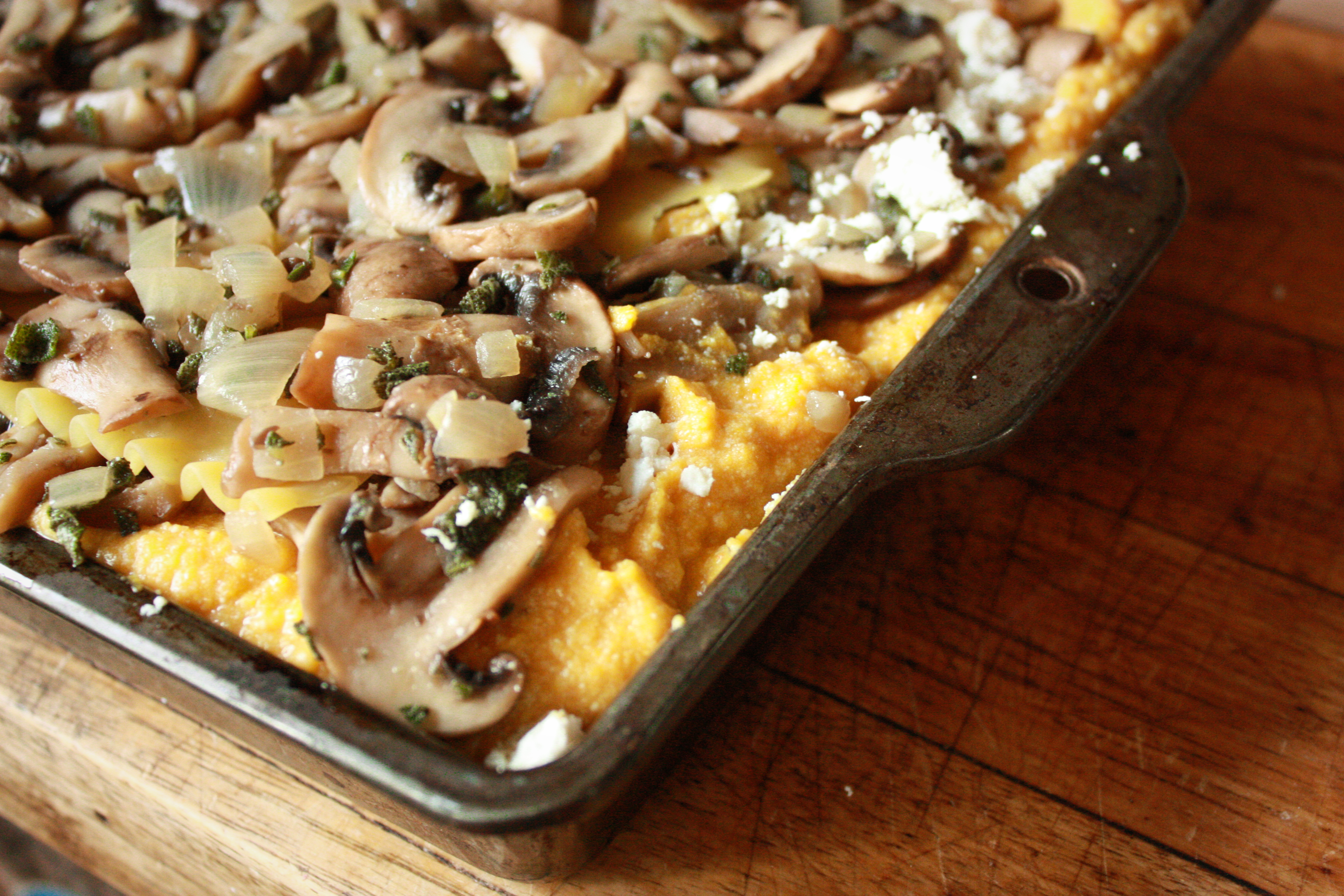 pumpkins, but now they’re in season and adorning fields all over Lancaster County, reminding us that fall is upon us.
Riding along Route 340 to the east or north on Route 501, we see pumpkins piled up on tables at the roadside stands. Most of us think of pumpkins as jack-o-lanterns, and most of the pumpkins we see along the roads are the large, round “jack” pumpkins into which we carve scary faces, but which are mushy and tasteless.
Then there is the Sugar Pie.
Smaller, sweeter, denser pumpkins with fewer seeds and no hollow space, Sugar Pies have flavor that almost explodes in your mouth. Sugar Pies are available at many local farm markets, or they are easy to grow yourself (but that’s a topic for next spring).
There are some who will tell you that pumpkin is one of those foods that is better (read: easier) from a can. I don’t buy that. Cooking a fresh pumpkin is as easy as, well, pie! Simply split the pumpkin in half, remove the seeds and strings, rub the skins with olive oil, and roast for an hour. Scoop out the flesh, allow it to drain in a colander lined with a dish towel for an hour, and then puree in a food processor. A 4-pound Sugar Pie pumpkin yields about 4 cups of cooked pumpkin. You can even do it ahead.
Bug don’t just make a pie–do something wild. Search your cookbooks or the Internet for a tasty main dish. We’ve used this one, Pumpkin-Mushroom Lasagna, adapted to our taste from The Moosewood Restaurant Celebrates cookbook, several times. It is a sweet and savory dish that is earthy and fragrant, a great dish to serve to company, and, the leftovers are amazing.
Pumpkin-Mushroom Lasagna
4 cups chopped onions
1 tablespoon olive oil
6 cups chopped portabella or other mushrooms
¼ cup chopped fresh sage leaves
1 teaspoon salt
¼ cup Marsala wine
½ cup vegetable stock
2 eggs, lightly beaten
3 ½ cups cooked and pureed pumpkin
3 cups ricotta cheese
¼ teaspoon freshly ground pepper
¼ teaspoon ground nutmeg
¾ pound uncooked lasagna noodles
1 ½ cups crumbled feta
½ cup grated Pecorino Romano cheese
- In a large pot, sauté the onions in the oil for 5 minutes. Add the mushrooms and sauté another 5 minutes, until the mushrooms begin to wilt. Add the sage, ½ teaspoon salt, wine and stock, and simmer on low heat for 5 minutes. Set aside.
- In a large bowl, stir together the pumpkin, eggs, ricotta, pepper, nutmeg, and ½ teaspoon salt. Set aside.
- Preheat the oven to 375 degrees. Lightly oil a 9×13 baking dish.
- Dip out a bout ½ cup of the liquid from the sautéed mushrooms and pour into the prepared baking dish. Cover the bottom with a layer of noodles, arranged closely together. Evenly spread half the pumpkin mixture. Spoon on about 1/3 of the mushrooms and sprinkle on ½ cup feta. Repeat this with another layer of noodles, pumpkin, mushrooms, and feta. Finish with another layer of noodles, the remaining mushrooms, feta, and top with grated Romano.
- Cover with foil and bake for 50 minutes. Remove the cover and bake for an additional 10 minutes, until the lasagna is bubbly, the noodles are tender, and the top is browned. Remove from the oven and let stand for 10 minutes covered before serving.
Serves 8-10.
Finally, don’t neglect the seeds. They’re rich in fiber, vitamins B and E, and make a great snack. Roast them in the oven with a little olive oil and salt or get fancy and use a chili rub or other seasoning you have on hand. Roast for 40 minutes in a 325 degree oven, stirring occasionally.
Good Housekeeping’s Cream of Anything Soup
Friday afternoon. I just arrived home from work. Today, I’m the chauffeur — one daughter to swim practice, the other to her voice lesson, I’ve got to make dinner and we won’t shop for groceries until Sunday. A quick look and I discover some unfinished broccoli in the vegetable bin. Excellent! I can whip up something tasty and healthy with just the broccoli and my cupboard staples. And I can do it quickly.
We have this thing we call “cream of anything” soup. It can be made from whatever veggies are in season. This week it’s broccoli, and right now it’s at its very best. The local markets are loaded with it, and as for healthy? Hey, it’s broccoli!
We’ve all heard, over and over, how good broccoli is for us. It’s high in fiber, low in calories, loaded with vitamins, its calcium level rivals that of milk, and there is some research that suggests that broccoli, a member of the cabbage family, may also be anti-carcinogenic.
So, if you want all that good stuff, but don’t have a lot of time, try this simple, creamy soup that is healthy and tastes great. Your kids will ask for seconds. It comes from the classic Better Homes and Gardens New Cookbook, which isn’t really new — it’s been around since 1930, but it’s still one of the best cookbooks around.
And here’s a really cool thing about this recipe: You can make it with whatever vegetables you fancy, or what you have on hand. Just change the vegetable and the seasonings. I’m posting to my blog, talkingfresh.typepad.com, a chart that shows how to adapt this recipe to a wide variety of vegetables, from A (asparagus) to Z (zucchini), and many more in between.
CREAM OF BROCCOLI SOUP
3 cups vegetable broth
1 cup chopped onion
4 cups cut broccoli
1 teaspoon dried thyme
1 bay leaf
1 clove garlic, minced fine
4 tablespoons unsalted butter
4 tablespoons all-purpose flour
1/2 teaspoon salt
1/4 teaspoon white pepper
2 cups milk
In a saucepan, combine broth, onion, garlic, broccoli and spices. Bring the mixture to a boil, reduce heat, cover and simmer until the broccoli is tender. Remove the bay leaf.
Place half the broccoli mixture in a blender, cover and blend until smooth, 30 to 60 seconds. Repeat with the remaining mix. Set the blended mix aside.
In the same saucepan, melt the butter. Add the flour, salt and pepper and stir until a smooth paste forms (in other words, a roux). Add the milk, and cook and stir until the sauce is thick and bubbly (in other words, a white sauce).
Add back the blended vegetable mixture, cook and stir until the soup is heated throughout. Season with additional salt and white pepper to taste.
Garnish with some fresh-chopped parsley and serve with grated Parmesan cheese.
Serves 6.
We’re serving the soup with simple and delicious Parmesan popovers (also made using cupboard staples) from a recipe at Cooks.com. The kids jumped with glee when they heard about these. The popovers are a perfect complement to a warm fall vegetable soup.
PARMESAN POPOVERS
1/4 cup grated Parmesan cheese
1 cup milk
1 cup flour
1 tablespoon butter, melted
1/4 teaspoon salt
2 eggs
Preheat oven to 450 degrees with rack on lower shelf.
Spray 6 large muffin or custard cups with non-stick spray or brush with butter. Sprinkle with grated Parmesan cheese.
In a medium bowl, stir together milk, flour, butter, and salt. Beat in eggs only until combined. Divide the mixture evenly into the 6 cups.
Place in oven and bake for 15 minutes. Reduce heat to 350 degrees and bake an additional 20 minutes. Brush with butter and serve while still warm.
Here is a chart taken from the wonderful Good Housekeeping Family Cookbook with amounts and yields for making a cream soup out of any vegetable.
Recommendation: double any of these recipes.
 Cheffzilla’s Kitchen