Category Archives: Vegetables
A Visit to My Produce
This week I met my farmers, and I walked the ground where my spring, summer, and autumn vegetables will grow. We joined a CSA this week, so we will be receiving regular bags full of produce—from mustard greens to watermelons to butternut squash and virtually everything in between—from a tiny but growing farm in Willow Street called Blue Rock Farm. And the farmers, Caitlin Brady and EmmaKate Martin are not what you’d expect.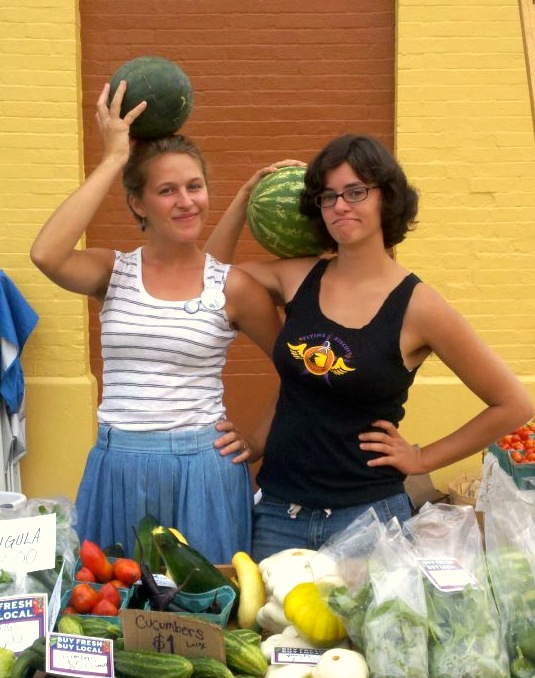
Caitlin Brady, 22, is the creative force behind the Blue Rock Farm. She was raised in Missouri on a 2000-acre farm that grew corn, soybeans, sorghum, and tobacco, using large machinery and production-farm techniques that are common to business farms all over the country (not that there is anything wrong with that). She’s been to five different colleges (currently Millersville University as a foreign-language major—Spanish, French, and Italian), she’s lived in several countries; and in big cities (Chicago) and small farming communities like Lancaster.
Caitlin started Blue Rock a couple of years ago and sold her products at several of the local farm markets—this year she will have a stand at the Eastern Market on East King Street on Saturdays.
EmmaKate grew up on the land she and Caitlin are currently farming. In fact, the land has been in her family for 6 generations. She graduated from Penn Manor High School and is now working the same land her father and her grandfather did, and further and further back. EmmaKate is also passionate about the land we all live on, and works with a volunteer organization that holds concerns for the environment as acts of faith.
 In a conversation with her spry 94-year-old grandfather, Park Mellinger, the other day, he told me how pleased he was that she and Caitlin were doing this kind of work. He told me that the plot they were currently working in was plowed under for planting for the first time since 1899—it’s been backyard to the farm house for generations.
Blue Rock farm is totally organic; the fertilizer is compost and the water is rain water collected in large containers all over the property and fed into the gardens through drip hoses. Caitlin and EmmaKate are making a serious go of this small family farm, currently having 15 half- and 6 whole shares in their CSA, which will deliver food weekly to three Lancaster County locations. A limited number of shares are still available.
The New York City chef Dan Barber, a loud and passionate advocate for small, local, organic farms—he runs one himself in upstate New York that produces for his restaurant—encourages consumers to “get to know your farmer and your fishmonger,” so that you will know exactly where your food comes from and on what it’s been raised.
I concur.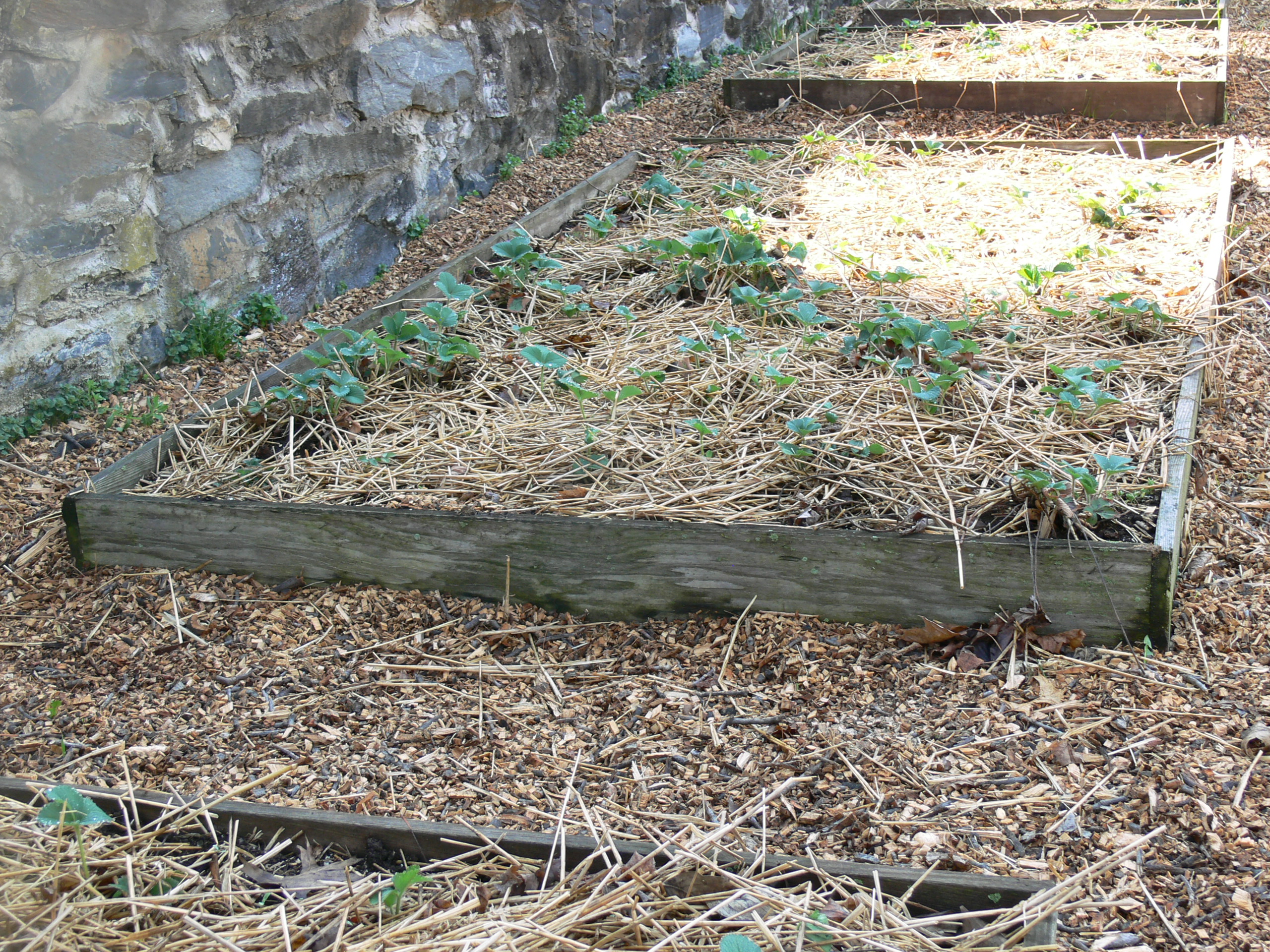
I have gotten to know my farmers and I, for one, couldn’t be happier. I know that my family will be eating some of the best, healthiest food available in Lancaster County, a place where there is more healthy food (and some pretty unhealthy stuff, too) than almost anywhere else in the nation.
Blue Rock Farm. Check it out!
Vegetable Lo Mein
I was in the Asian market today picking up fresh sprouts for a batch of pad Thai I plan to make for supper tonight, and another customer in the store asked the clerk if anyone in the market had a recipe for lo mein. When no one in the market could give her an idea of how to go about it, I offered to help her out. Not my favorite dish, although I do love a good plate of vegetarian lo Mein, here is a simple recipe for the noodle dish for beginners. There are certainly other, more complex recipes, and had I time (today is “Free Rita’s Day” here in Lancaster), I’d produce a recipe with much more complex flavor, but most neighborhood restaurants don’t go for complex, they go for fast and tasty. Here is one I got from a neighborhood restaurant in Alexandria, VA, when I lived in the Rosemont neighborhood. If you don’t know Rosemont, you haven’t lived. This is a wonderful, simple dish made with vegetables. It can be augmented with chicken, Chinese roast pork, shrimp, or tofu, and will taste even better.
This recipe comes from Grace Young’s The Wisdom of the Chinese Kitchen: Classic Family Recipes for Celebration and Healing. In the book, Grace says: “Vegetable Lo Mein is one the easiest dishes for a beginner to make. The mastery comes in correctly slicing the vegetables and not overcooking the noodles. You will find a variety of fresh egg noodles in the refrigerator section of most Chinese food markets. The best noodles for lo mein are about 1/4 inch thick, and come either uncooked or precooked. Either noodle can be used and will require one to three minutes of boiling, follow package directions.”
Vegetable Lo Mein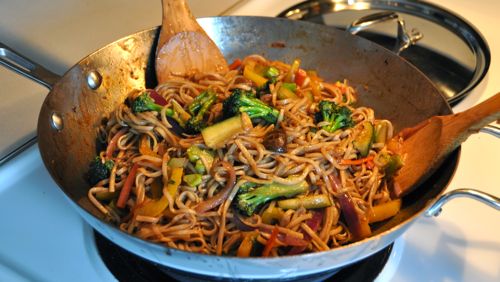
Ingredients:
1-pound package Chinese narrow, flat egg noodles (resembling linguine)
6 dried Shitake mushrooms
1 small can Chinese straw mushrooms
1 medium onion, halved and sliced in half-moon rings 1/4-inch thick
2 stalks celery, one-inch slices, sliced diagonally
1 broccoli crown, florets separated
6 Napa cabbage leaves
1 tablespoon sesame oil
2 tablespoons soy sauce
3 tablespoons peanut oil
1 tablespoon finely minced ginger
1 cup julienne carrots
2 scallions, finely shredded
2 tablespoons oyster sauce
Optional: 1 chicken breast, trimmed of fat, cut in half lengthwise then sliced crossways into small strips; or 24 31- to 36-count (medium) shrimp, peeled and deveined; or 1/2 pound extra-firm tofu, pressed dry, marinated 1/2 hour in 2 tablespoons soy sauce, 1 tablespoon rice-wine vinegar, and 1 teaspoon sesame-seed oil; or 1/2 pound Asian-roasted BBQ pork, cut into 1/2-inch cubes
Preparation:
In a medium bowl, soak the Shitake mushrooms in 1/4 cup cold water for 30 minutes, or until softened. Drain and squeeze dry, reserving soaking liquid. Cut off and discard stems and thinly slice the caps.
Wash the cabbage leaves in several changes of cold water and allow to thoroughly drain in a colander until dry to touch. Trim 1/4 inch from the stem end of the cabbage leaves and discard. Stack 2 to 3 cabbage leaves at a time and crosswise into 1/4-inch-wide shreds.
In a 4-quart saucepan, bring about 2 quarts of water to a boil over high heat. Add noodles , return to a rolling boil, and boil 2 to 3 minutes. Rinse under cold water and drain the noodles thoroughly. Transfer to a medium bowl, add sesame oil and 1 tablespoon soy sauce, and mix well. Set aside.
Heat a 14-inch flat-bottomed wok or 12-inch flat skillet over high heat until hot but not smoking. Add 1 tablespoon peanut oil and ginger, and stir-fry 20 seconds. Add the onions, celery, carrots, scallions, and mushrooms, and stir-fry 1 minute, or until vegetables are just limp. Transfer vegetables to a plate.
Add 1/4 cup water and broccoli; cover and steam 3 minutes, then drain and place on the plate with the other vegetables.
[Add protein ingredients here if you choose–see note*]
Add the remaining 2 tablespoons vegetable oil and cabbage, and stir-fry 1 minute, or until cabbage begins to wilt. And the cooked carrot mixture, noodles, and reserved mushroom soaking liquid, and stir-fry 2 to 3 minutes, or until noodles are heated through. Swirl in the remaining 1 tablespoon soy sauce and oyster sauce and toss to combine. Serve immediately.
* Note: If you choose to add protein ingredients such as chicken, shrimp, tofu, or pork, stir-fry them until just barely done after stir-frying the vegetables but before the cabbage. Set aside on a warm plate. Then resume the recipe with with the cabbage and continue until hot and well mixed. If you add protein ingredients, double the oyster sauce and increase the soy sauce by 1 tablespoon.
Thanksgiving With a Lighter Touch
For anyone watching their weight, Thanksgiving has become a day filled with potential pitfalls and dietary disappointments. The original Pilgrim celebration of gratitude for having enough food to survive the coming winter has evolved into an all-day, all-you-can-eat extravaganza. Many families spend the day parked on their couches, watching parades followed by football, snacking whether they are hungry or not, before sitting down to an enormous meal.
Contrary to popular opinion, it is possible to prepare and serve a light, healthy Thanksgiving dinner without depriving your guests of their traditional favorites or letting them go hungry. By making a few simple changes to your menu, it is easy to make a meal you and your guests will enjoy and remember, without the morning-after regret that too often accompanies this special day
Suggestion One: Cut the fat.
The centerpiece of Thanksgiving dinner is almost certainly the turkey, which is an easy place to cut fat without cutting flavor. Unless you are entertaining a dozen or more people, a turkey breast may be a better choice than a whole turkey. White meat is far leaner than dark meat, and turkey cooked on a grill (breast or whole bird) will release much of its internal fat during the cooking process. Brining a turkey can compensate for any moisture lost through decreasing the fat. This recipe is for a 12-15 pound turkey. If you have a larger turkey, double the brine recipe.
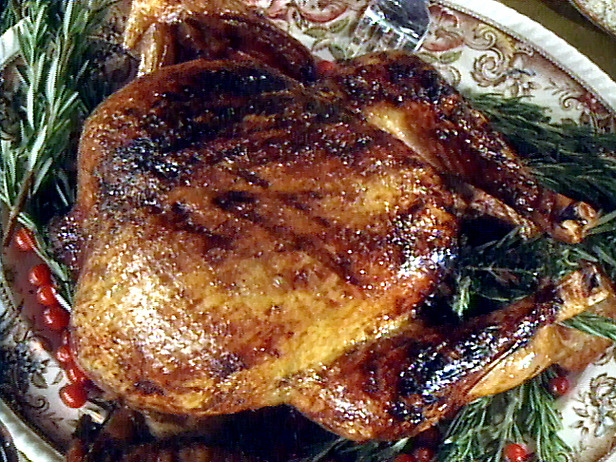
Grilled turkey
Ingredients:
Brine:
1 gallons water
1 ½ cups apple cider
¾ cup kosher salt
1 cups brown sugar
2-3 bay leaves
2 branches fresh rosemary, stripped from the branch
5-10 whole pepper corns
2-3 cloves fresh garlic
Peel of 1 navel orange, coarsely chopped
Preparation:
The day before cooking, bring one-half gallon of water and all other ingredients to a brisk boil; immediately turn off the heat, cover and allow the brine to cool to room temperature. Half way through the cooling process, add the remaining half-gallon of cold water.
When the brine is completely cooled, place the turkey, breast side down, in a brining bag, a food-grade bucket or large soup pot. Pour the brine over the turkey and refrigerate covered for 8-16 hours, turning the turkey over two-thirds of the way through. Leaving the turkey in the brine for more than 16 hours may leave the turkey mushy when finished.
Before cooking, remove the turkey from the brine and pat dry.
Dry Rub:
2 tablespoons kosher salt
1 1/2 teaspoons finely ground white pepper
2 tablespoons granulated garlic
1 tablespoon ground ginger
1 teaspoon Bell’s poultry seasoning
1 teaspoon smoked paprika
Olive oil in a spray can
Preparation:
Start with a dry rub. Wash the turkey and pat dry. Rub the turkey inside and out with this rub or any favorite combination of spices. Spray the turkey with the olive oil, then place it, unstuffed, on the grill with the coals or burners not directly underneath. Include a pan to catch the drippings. Cook the turkey until the legs can be jiggled loosely from the thighs, (180°F on a thermometer inserted into the thigh) or in the case of a breast, until a meat thermometer inserted deep into the meat (but not touching the bone) reads 180° F. Remove the turkey from the grill, cover with foil, and allow to rest 15 minutes before carving.
Suggestion Two: Slow down and enjoy the company.
Many families load the Thanksgiving table with multiple options for entrees and side dishes. Dinner begins with the circulation of bowls and platters around the table, allowing each guest to take their portion before passing it on. By the time everyone is served, the food is cold and everyone is tired of waiting to eat.
By serving Thanksgiving dinner in courses, it is easy to fill up on low-calorie, vegetable-based dishes before confronting the tempting entrees and side dishes. An added benefit will be the wonderful conversations your family and guests will have in between each course.
Start with a soup course (a corn soup is perfect for Thanksgiving), serving it in cups or small bowls. Then serve an autumn salad, made with butternut squash, cranberries, pumpkin seeds and fresh greens, with a tangy-creamy dressing.
Try these recipes, which use traditional ingredients that were used in the 1600s.
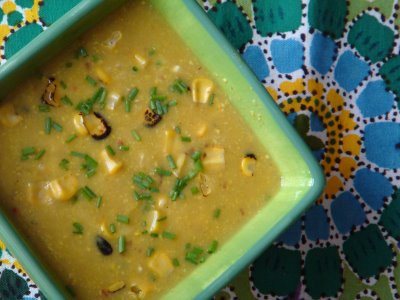
Curried Corn Soup
Ingredients:
2 tablespoons olive oil
½ cup finely chopped green bell pepper
½ cup finely chopped red bell pepper
¼ cup minced shallots
2 teaspoons curry powder
½ teaspoon kosher salt
3 cups fresh corn or one 16-ounce bag frozen corn, thawed
1 cup vegetable stock
½ teaspoon freshly ground pepper
3 cups soy milk, 2% milk or evaporated skim milk, divided
½ cup shredded reduced fat cheese, divided (optional)
Preparation:
Heat the oil in a large soup pot over medium-high heat. Add the bell peppers, stirring occasionally, until soft. Add the shallots and stir 2 minutes. Add the curry powder and salt, and stir to combine. Stir in the corn, stock, and pepper; bring to a boil, reduce the heat to medium, cover and cook ½ hour.
Transfer 2 cups of soup to a blender, add 1 cup milk, and process until smooth. Return the blended corn soup to the soup pot, add the remaining milk, and stir gently until the soup is hot.
Serve immediately, garnished with the optional cheese and some chopped chives or parsley.
Adapted from soyfoodcouncil.com
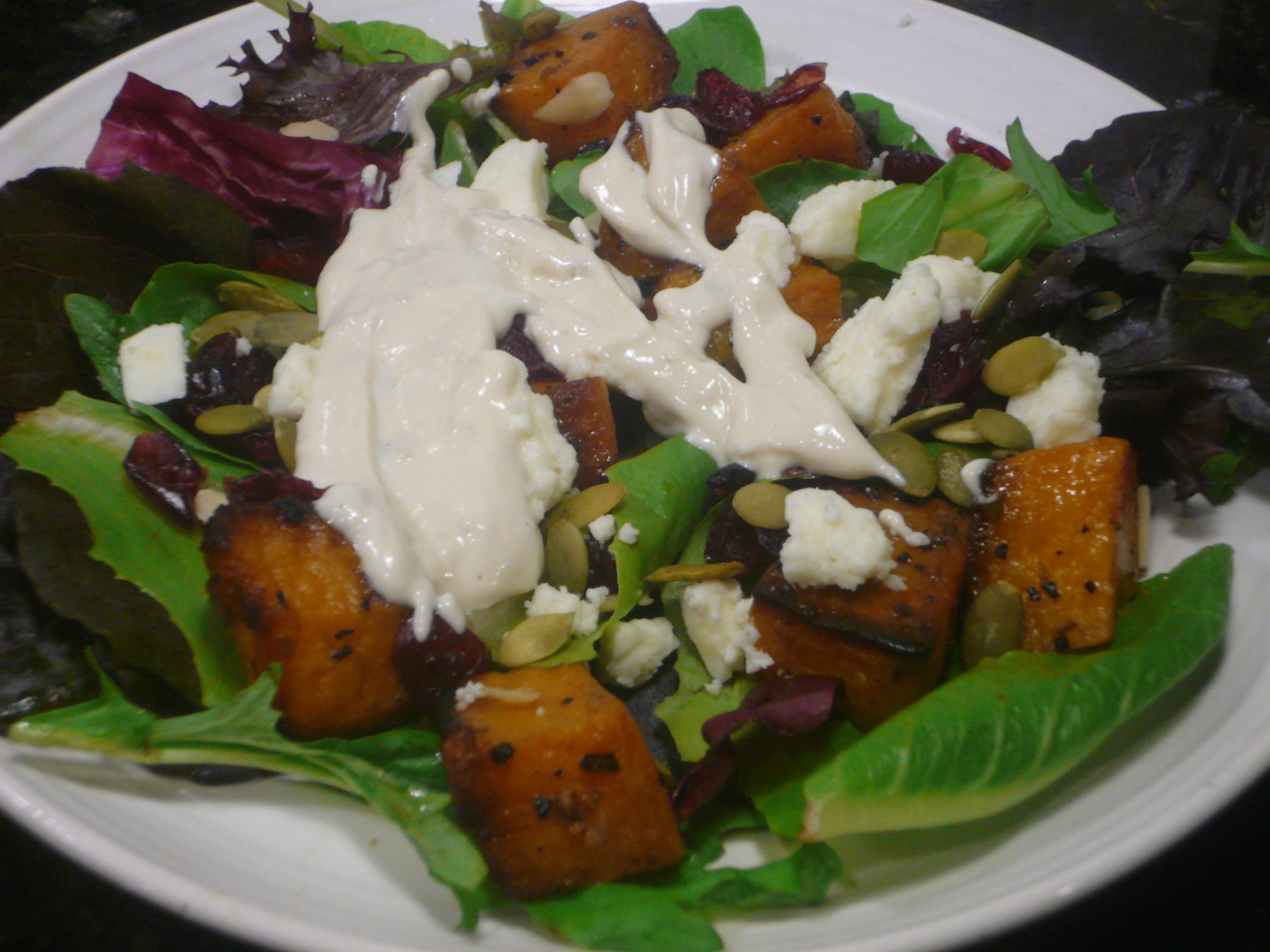
Roasted Squash Salad with Tahini Dressing
Ingredients:
1 medium butternut squash
Olive oil spray in a can
½ teaspoon paprika
4 tablespoons pumpkin seeds
¼ cup dried cranberries
8 ounces feta cheese, crumbled
2 tablespoons fresh parsley, chopped
2 cups spring mix
2 tablespoons plain Greek yogurt
1 ½ tablespoons tahini
2 tablespoons fresh lemon juice
1 small garlic clove, finely minced
½ cup boiling vegetable stock
Preparation:
Preheat the oven to 375°F. Peel the squash, halve, remove the seeds, and cut into 1-inch cubes. Lightly spray a roasting pan with olive oil, spread the squash on the pan, sprinkle with paprika, salt, and pepper, and spray with oil. Roast 35 minutes, stirring halfway through, until the squash is tender. Put the pumpkin seeds on baking sheet and bake for the last five minutes of the cooking time.
While the squash is roasting, make the dressing: whisk together the yogurt, tahini, lemon juice, and garlic. Slowly stir in 1-2 tablespoons stock, until the dressing reaches the consistency of buttermilk.
Plate the salad greens, top with the squash, pumpkin seeds, cranberries, feta cheese, and parsley, and sprinkle the dressing on top. Season with salt and pepper and serve immediately.
Adapted from redonline.co.uk
Suggestion Three: Limit options and focus on vegetables.
In order to make your dinner lighter and healthier, consider limiting the number of options you present your guests, featuring one or two interesting new recipes in which vegetables play the starring role rather than laying out the full cast of customary starchy favorites. No one needs stuffing, mashed potatoes and sweet potato casserole, after all. New flavors may encourage new behaviors, as serving old favorites can entice your guests to heap too-large portions on their plates simply because they are accustomed to doing so.
Here is a vegetable dish that is out of the ordinary, yet made with many of the familiar ingredients of traditional Thanksgiving dinners. It is easy to make, beautiful to serve, nutritious, and much more interesting than the customary green-bean casserole with cream of mushroom soup and canned onion rings. And so much better tasting!

Polenta Dome with Roasted Autumn Vegetables
Ingredients:
4 cups vegetable stock
1 ½ teaspoons salt
2 teaspoons olive oil
Olive oil spray in a can
2 cups diced onions
3 garlic cloves, minced or pressed
2 cups cornmeal
1 medium butternut squash, peeled, seeded, and shredded
1 tablespoon fresh sage, chopped (1 teaspoon dried)
2 teaspoon ground fennel seeds
½ teaspoon freshly ground black pepper
Preparation:
In a covered pot, bring the stock and 1 teaspoon salt to a boil. Spray a medium-sized mixing bowl.
While the stock heats, heat olive oil in a heavy skillet on medium heat. Cook the onions, garlic, and remaining salt for about 25 minutes, until the onions are caramelized. Stir the squash, sage, fennel, and pepper into the sautéed onions and cook for 3-4 minutes. Remove from heat and cover.
When the stock boils, gradually pour in the cornmeal, stirring vigorously. Reduce the heat until the thickening cornmeal simmers gently. Cook, stirring frequently, until the polenta is thick (but still pourable), adding hot water as necessary, and tastes done. Fine cornmeal cooks in a few minutes; courser meal takes longer. The consistency is key.
When the polenta is done, stir in the sautéed vegetables and cheese. Pour into the oiled bowl and set aside to cool for at least 30 minutes, until set.
About a half hour before serving, turn the cooled polenta dome onto a baking pan or ovenproof platter sprayed with olive oil and bake for 30 minutes, until hot. Serve on a bed of steamed spinach or Swiss chard and surround with toasted autumn vegetables.
Roasted Autumn Vegetables
Ingredients:
Marinade:
1/3 cup olive oil
2 tablespoons Balsamic vinegar
5 cloves garlic, minced
½ teaspoon kosher salt
¼ teaspoon freshly ground black pepper
1-2 teaspoons fresh rosemary or sage, chopped
Vegetables:
2 medium onions, peeled, cut into 8 pieces
1 cup baby carrots
2 sweet potatoes or ½ seeded butternut squash, cut into 1-inch pieces
1 red and 1 yellow bell pepper, cut to 2-inch squares
2 cup tiny patty pan squash or 2 medium zucchini, 1-inch slices, halved
8 ounces fresh whole cremini, baby portabella or white mushrooms, halved
6 firm, fresh plum tomatoes, halved
Preparation:
Preheat the oven to 425°F.
In a bowl mix together the marinade. Toss the hard vegetables (onions, carrots and potatoes) in the marinade, and spread on a baking sheet. Roast for 20 minutes, turning once. Toss the remaining vegetables in the marinade. Lower the heat to 400°F, place on a second baking sheet and roast another 20 minutes, turning once, and turning the hard vegetables again. Serve on a large platter around the polenta dome. Watch carefully that the vegetables don’t burn.
Adapted from Moosewood Restaurant Celebrates
Suggestion Four: Change Your Thinking about Stuffing and Gravy
Probably the most troublesome parts of the Thanksgiving meal for people endeavoring to eat light and healthy are the stuffing and the gravy. The notion that stuffing and gravy are integral to the meal is deeply ingrained in our consciousness. A simple way to cut some of the fat from stuffing is to bake it outside of the turkey. Likewise, traditional gravy can be made without calorie-laden pan drippings. Even better, try a new approach to stuffing and gravy altogether, replacing bread cubes with high-fiber whole grains such as quinoa or barley and combining interesting new flavors into an almost fat-free gravy.
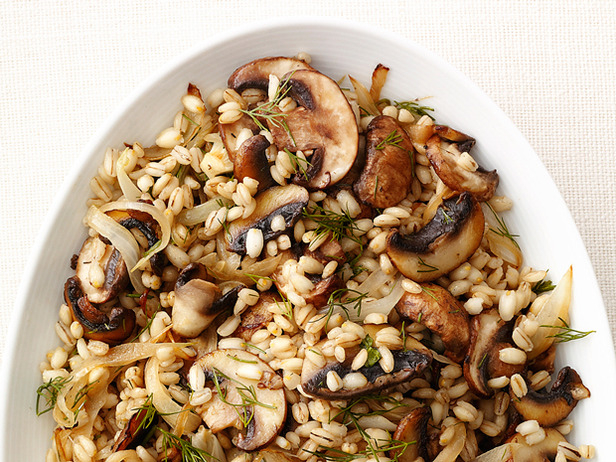
Wild Mushroom Barley Stuffing
Ingredients:
2 tablespoons kosher salt, divided
1 ½ cups uncooked pearled barley
2 teaspoons olive oil, divided
1 medium onion, chopped
5 slices turkey bacon
2 small carrots, diced
1 pound fresh wild mushrooms, assorted varieties
2 cloves garlic, minced
2 tablespoons fresh thyme, minced
2 tablespoons fresh sage, chopped
¼ teaspoon freshly ground pepper
2 cups vegetable broth, heated to a simmer
1 tablespoons fresh parsley, chopped
Preparation:
Bring eight cups of water and 1 ½ teaspoons salt to a boil in a large saucepan; add barley. Cover, reduce the heat, and simmer until tender, about 30 minutes; drain.
Meanwhile, heat 1 teaspoon oil in a large pot over medium-high heat; add onion, bacon, and carrots. Cook, stirring often, until onion is lightly browned and almost tender, about five minutes. Add mushrooms and garlic; cook, stirring often, until the vegetables are tender, about five minutes more.
Stir in herbs, pepper, remaining salt and olive oil. Reduce heat to low, stir in broth and barley, toss to coat. Remove from heat, transfer to a serving bowl, and sprinkle with parsley.
From weightwatchers.com
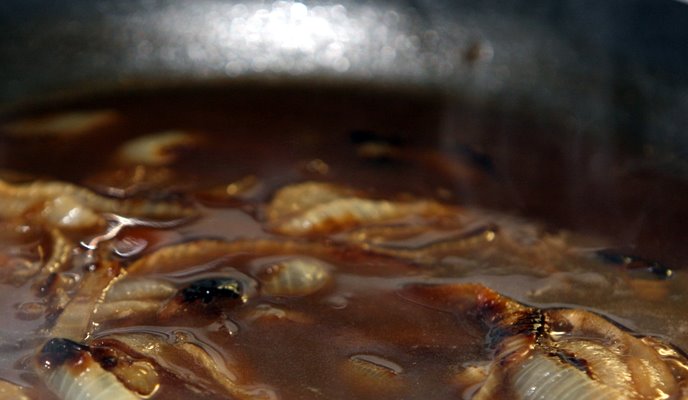
Caramelized Onion Gravy
Ingredients:
2 teaspoons olive oil
6 cups thinly sliced sweet or Spanish onions
1 tablespoon sweet paprika
½ teaspoon salt
¼ teaspoon dried thyme or ¾ teaspoon fresh thyme, chopped
½ teaspoon fresh rosemary, minced
½ teaspoon dried marjoram
¼ teaspoon nutmeg
3 tablespoons dark soy sauce
2 cups vegetable broth
¼ cup dry sherry wine
2 tablespoons cornstarch
¼ teaspoon freshly ground pepper
Preparation:
Warm the oil in a large saucepan on medium-high heat. Add the onions and sauté for 2-3 minutes, until the onions are coated with oil. Add the paprika, salt, herbs, and nutmeg. Reduce the heat to medium and continue to cook, uncovered, stirring occasionally, for about 30 minutes, until the onions are limp and very brown. You should have about a generous cup of caramelized and very sweet onions.
Add the soy sauce, 1 ¾ cups broth, and the wine to the onions; bring to a simmer. Dissolve the cornstarch in the remaining broth and mix into the gravy in a slow but steady stream. Stir constantly until the gravy is thickened.
From Moosewood Restaurant Celebrates
Suggestion Five: Serve smaller plates and individual portions
A cherished part of Thanksgiving for many is filling one’s plate with heaps of good food. Slow everyone down a bit by serving your meal on smaller salad plates rather than dinner plates. Your guests will retain the pleasure of combining delicious foods together without committing themselves to more than they can – or should—eat in one sitting. If, by some chance, they are still hungry after cleaning their plate, they are welcome to come back for more.
 The same strategy works well with dessert. Instead of baking a pumpkin pie, bake the pumpkin custard (substituting egg whites and evaporated skim milk to lower the fat) in ramekins. Serve each guest their own portion with a ginger snap in a ramekin, saving them the fat and calories of the crust and the temptation to eat more dessert than they should.
The secret to losing weight or maintaining a healthy weight is to make a series of small changes and then be consistent in retaining those changes; but in the end, food and the experience of sharing a meal with loved ones should still be pleasurable. This Thanksgiving, try one or two of these tips to save yourself unnecessary fat and calories without losing any of the enjoyment of spending this special day with the people you love. Who knows? Maybe you will be creating new, healthier traditions for years to come.
Split Pea Soup with Rosemary
I had a marathon cooking session the other Sunday, preparing eight dishes for the family and for the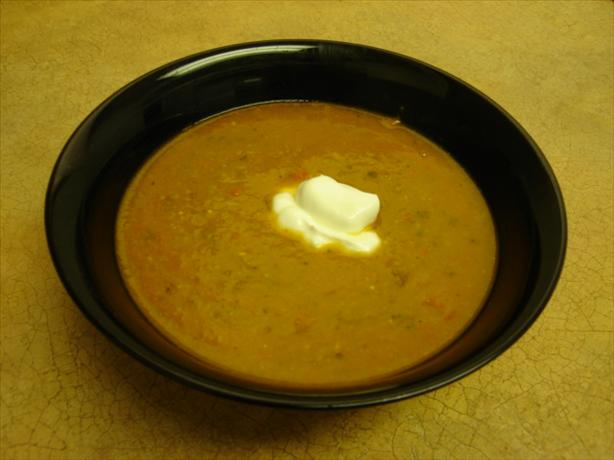 freezer and for fun. I love doing this, and posting my progress along the way on Facebook. Great fun, gets followers to come along for the ride, and perhaps inspires a person or two to try it for themselves. One recipe I made last week captured a bit of attention, and I decided that it needed to be posted here and there so that people could try it for themselves.
So here is a wonderful split pea soup–not the green soup with a piece of smoked ham most people are used to–a different, more aromatic and herbal treat that is just perfect for these fall days when a chill is beginning to show up.
Split Pea Soup with Rosemary
Ingredients:
1 ½ cups split peas
2 teaspoons olive oil, divided
2 cups chopped onion
1 cup diced carrot
1 bay leaf
1 tablespoon minced garlic, divided
1 tablespoon minced fresh rosemary, divided
1 teaspoon paprika
1/2 teaspoon freshly ground black pepper
1 tablespoon tomato paste
1 tablespoon soy sauce
6 cups ( 3 cans) vegetable stock
1 teaspoon kosher salt
¼ cup fresh parsley
¼ cup low-fat sour cream
Preparation:
1. Sort and wash peas; cover with water to 2 inches above peas, and set aside. Heat 1 teaspoon oil in a Dutch oven over medium-high heat. Add onion, carrot, and bay leaf; saute’ 5 minutes, stirring frequently. Add 2 teaspoons garlic, 1 teaspoon rosemary, paprika, and pepper; cook 3 minutes. Add tomato paste and soy sauce; cook until liquid evaporates.
2. Drain peas and add to pot. Add stock and salt to onion mixture and bring to a boil. Cover, reduce heat to medium-low, and simmer 1 hour, stirring occasionally. Discard bay leaf.
3. In batches, place the soup in a blender and process until smooth; then pour the soup into a serving bowl.
4. Combine remaining oil, garlic, rosemary and parsley; stir into soup. Serve with a dollop of sour cream and garnish with a sprig of fresh rosemary.
Braised Chicken in White Wine Sauce — Weight-watchers Style
I’ve got to tell you about this chicken recipe. There’s three things to recommend it: 1) it’s about the simplest hearty chicken dish I’ve ever made; 2) because it’s weight watchers, it’s a guilt-free supper, being extremely low in fats and carbs; and 3) it’s so wonderful and tasty to eat that I make it about once a week. You won’t ever find a more tasty, simple, and filling dish, great for a busy family like mine.
Ingredients
- 3 slices turkey bacon, chopped
- 3 1/2 pounds chicken pieces, skin removed
- 1 onion, chopped
- 2 celery stalks, chopped
- 1 head garlic, cloves peeled
- 1 tablespoon tomato paste
- 1/2 pound cremini or white mushrooms, sliced (cremini mushrooms add a wonderful layer of flavor)
- 1 cup frozen small onions
- 1 (14 1/2 oz.) can reduced-sodium chicken broth
- 1/2 cup dry white wine
- 1/2 pound small red potatoes, quartered
- 4 carrots, cut into 2-inch lengths
- 2 tablespoons all-purpose flour
- 2 tablespoons water
- 2 tablespoons chopped fresh parsley
Instructions
- Heat nonstick Dutch oven over medium-high heat. Add bacon and cook until crisp, about 5 minutes; transfer to paper towels to drain.
- Add chicken to pan in two batches, and cook until lightly browned on all sides, about 5 minutes per batch. Transfer chicken to plate.
- Reduce heat to medium. Add chopped onion, celery and garlic to Dutch oven; cook, stirring, until vegetables are lightly browned, about 8 minutes. Stir in tomato paste. Add mushrooms and frozen onions; cook, stirring, 1 minute. Add broth, wine, potatoes and carrots; bring to boil, scraping up browned bits from bottom of pot.
- Return chicken and bacon to Dutch oven. Reduce heat and simmer, covered, until vegetables are tender and juices run clear when chicken thigh is pierced, about 25 minutes.
- Meanwhile, whisk together flour and water in small bowl. Stir in about 1⁄4 cup of hot stew liquid until blended. Add liquid to pot and cook, stirring occasionally, until liquid bubbles and thickens, about 3 minutes. Serve sprinkled with parsley.
 Cheffzilla’s Kitchen