Category Archives: Herbs and Spices
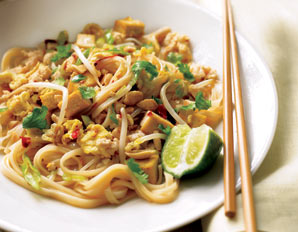
Yet Another Pad Thai
|
12 ounces dried rice noodles
 1/2 cup white sugar
1/2 cup distilled white vinegar
1/4 cup fish sauce
2 tablespoons tamarind paste
1 tablespoon vegetable oil
2 boneless, skinless chicken breast
halves, sliced into thin strips
1 tablespoon vegetable oil
|
1 1/2 teaspoons garlic, minced
4 eggs, beaten
1 1/2 tablespoons white sugar
1 1/2 teaspoons salt
1 cup coarsely ground peanuts
2 cups bean sprouts
1/2 cup chopped fresh chives
1 tablespoon paprika, or to taste
1 lime, cut into wedges
|
| 1. | Place rice noodles in a large bowl and cover with several inches of room temperature water; let soak for 30 to 60 minutes. Drain. |
| 2. | Whisk sugar, vinegar, fish sauce, and tamarind paste in a saucepan over medium heat. Bring to a simmer, remove from heat. |
| 3. | Heat 1 tablespoon vegetable oil in a skillet over medium-high heat. Add chicken; cook and stir until chicken is cooked through, 5 to 7 minutes. Remove from heat. |
| 4. | Heat 1 tablespoon oil and minced garlic in a large skillet or wok over medium-high heat. Stir in eggs; scramble until eggs are nearly cooked through, about 2 minutes. Add cooked chicken breast slices and rice noodles; stir to combine. |
| 5. | Stir in tamarind mixture, 1 1/2 tablespoons sugar, and salt; cook until noodles are tender, 3 to 5 minutes. Stir in peanuts; cook until heated through, 1 to 2 minutes. Garnish with bean sprouts, chives, paprika, and lime wedges. |
Potato Leek Soup
This is the kind of soup that is so simple to make yet tastes like you really know your way around the kitchen. I grew up loving this classic soup as a kid, and eating it always brings me back to a happy place. The flavors of the leeks and the potatoes compliment each other so well. I like mine pureed, but if you like it a bit chunky you can use a potato masher instead of an immersion blender to give you bigger chunks. This is ready in under 30 minutes. (To make this gluten-free, simply eliminate the flour)
Servings: 6 • Serving Size: 1 cup • Old Points: 3 pt • Points+: 3 pt
Calories: 110.3 • Fat: 0.7 g • Protein: 3.5 g • Carb: 23.2g • Fiber: 2.3 g • Sugar: 3.4 g
Sodium 660.6 mg (without adding salt)
Potato Leek Soup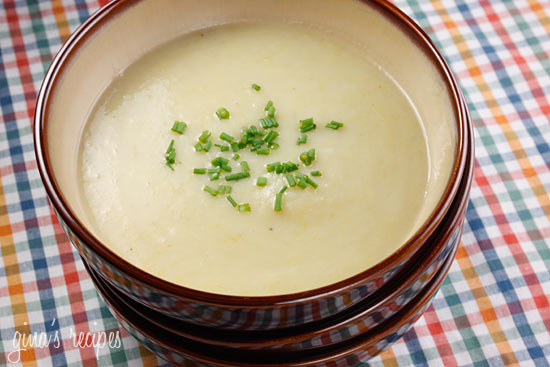
Ingredients:
- 1 bunch leeks (about 4) dark green stems removed
- 1/2 large white onion, chopped
- 3 red potatoes, peeled and cut into cubes
- 1 tbsp flour
- 1 tbsp butter
- 5 cups fat free chicken stock (or vegetable broth for vegetarians)
- 1/2 cup 2% milk
- salt and fresh pepper
Preparation:
Wash leeks very carefully to remove all grit. I usually cut them horizontally and separate the rings to make sure no dirt remains. Coarsely chop them when washed.
In a medium soup pot, melt butter and add flour on low flame. Using a wooden spoon, mix well. This will thicken your soup and give it a wonderful flavor.
Add chicken stock, leeks, onion, potatoes and bring to a boil. Cover and simmer on low for about 20-25 minutes, until potatoes are soft. Using an immersion blender, blend the soup until smooth adding the milk and adjusting salt and pepper to taste. Serve immediately.
Serving size: 1.5 cups
PPV: 4.5
Meatball and Spaghetti Soup
What can be more kid friendly than a bowl of soup with spaghetti and meatballs! Lean turkey meatballs are cooked in a light tomato broth with cut up spaghetti. This is a one pot meal my whole family loves and leftovers are great for lunch.
This is a recipe from the archives that has been greatly overlooked. I finally got a chance to re-photograph this one, something I wanted to do for a while because it’s very popular in my home and I’m sure it will be popular in yours. A delicious quick family-friendly meal for under $10!
Servings: 6 • Size: 1/6th (about 1 1/2 cups) • Old Points: 4 pts • Points+: 5 pts
Calories: 212.9 • Fat: 3.2 g • Carb: 27.4 g • Fiber: 3.9 g • Protein: 22.1 g • Sugar: 2 g
Sodium: 738.7 mg (without added salt)
Ingredients: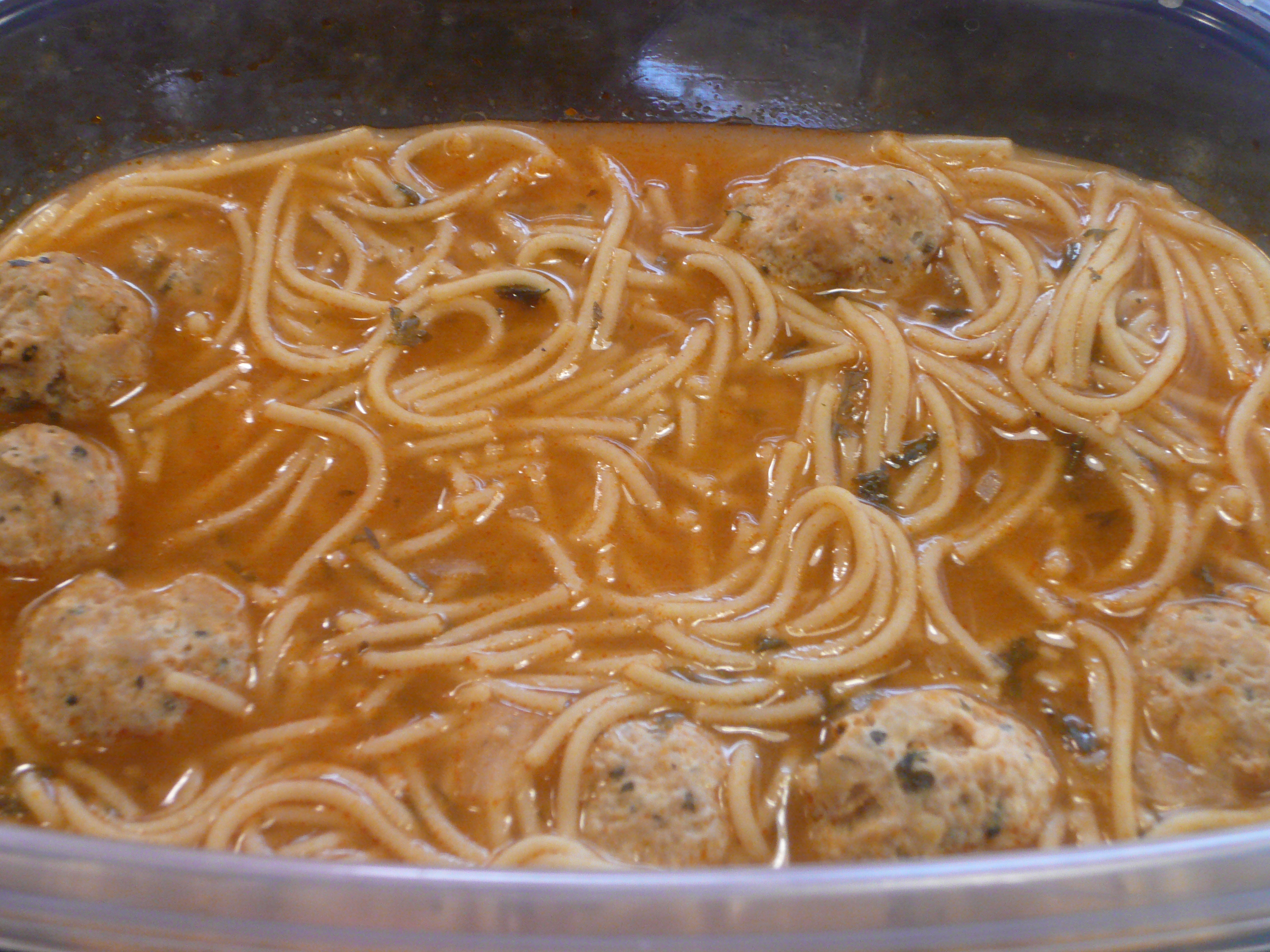
For the soup:
- 5 cups low sodium, fat-free chicken broth
- 2 cups water
- 2 chopped cloves garlic, divided
- 4 tbsp chopped fresh parsley, divided
- 1/2 onion, chopped, divided
- 3-4 tbsp tomato sauce
- pinch crushed red pepper flakes (optional)
- kosher salt and fresh pepper
- 6 oz dry cut up spaghetti, I used a low-fat whole-wheat product, but try it with whole-wheat macaroni. It’s easier for kids to eat with a spoon
For the meatballs:
- 16 oz 99% lean ground turkey
- 1 small egg
- 1/4 cup seasoned breadcrumbs
- 1/4 cup grated Parmesan cheese
- 1 tbsp fresh chopped basil
Directions:
In a soup pot over medium heat, bring chicken broth, water, 1 clove crushed garlic, 2 tbsp chopped parsley, 1/4 of the chopped onion, tomato sauce, crushed red pepper flakes and fresh black pepper to a boil; simmer about 5 minutes. Meanwhile, make the meatballs by combining ground turkey, Parmesan cheese, egg, remaining garlic, remaining onion, remaining parsley, breadcrumbs, salt and pepper. Form into little 1 inch meatballs (about 36). Drop meatballs into the broth, cook about 3 minutes; add pasta and cook according to package directions. Add fresh basil, adjust salt and pepper to taste and serve with grated Parmesan cheese.
Split Pea Soup with Rosemary
I had a marathon cooking session the other Sunday, preparing eight dishes for the family and for the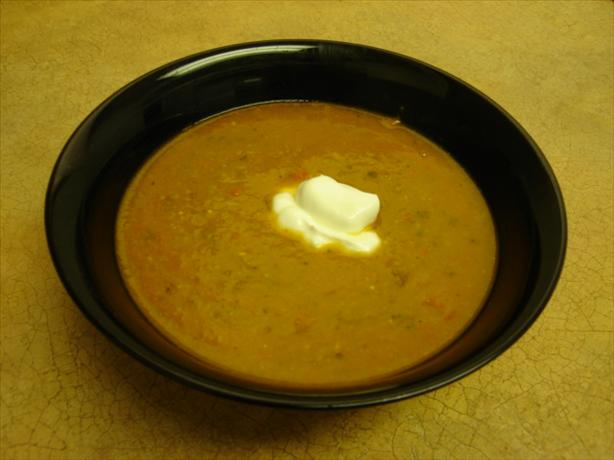 freezer and for fun. I love doing this, and posting my progress along the way on Facebook. Great fun, gets followers to come along for the ride, and perhaps inspires a person or two to try it for themselves. One recipe I made last week captured a bit of attention, and I decided that it needed to be posted here and there so that people could try it for themselves.
So here is a wonderful split pea soup–not the green soup with a piece of smoked ham most people are used to–a different, more aromatic and herbal treat that is just perfect for these fall days when a chill is beginning to show up.
Split Pea Soup with Rosemary
Ingredients:
1 ½ cups split peas
2 teaspoons olive oil, divided
2 cups chopped onion
1 cup diced carrot
1 bay leaf
1 tablespoon minced garlic, divided
1 tablespoon minced fresh rosemary, divided
1 teaspoon paprika
1/2 teaspoon freshly ground black pepper
1 tablespoon tomato paste
1 tablespoon soy sauce
6 cups ( 3 cans) vegetable stock
1 teaspoon kosher salt
¼ cup fresh parsley
¼ cup low-fat sour cream
Preparation:
1. Sort and wash peas; cover with water to 2 inches above peas, and set aside. Heat 1 teaspoon oil in a Dutch oven over medium-high heat. Add onion, carrot, and bay leaf; saute’ 5 minutes, stirring frequently. Add 2 teaspoons garlic, 1 teaspoon rosemary, paprika, and pepper; cook 3 minutes. Add tomato paste and soy sauce; cook until liquid evaporates.
2. Drain peas and add to pot. Add stock and salt to onion mixture and bring to a boil. Cover, reduce heat to medium-low, and simmer 1 hour, stirring occasionally. Discard bay leaf.
3. In batches, place the soup in a blender and process until smooth; then pour the soup into a serving bowl.
4. Combine remaining oil, garlic, rosemary and parsley; stir into soup. Serve with a dollop of sour cream and garnish with a sprig of fresh rosemary.
Are You Growing Your Own Herbs?
Are you growing your own herbs?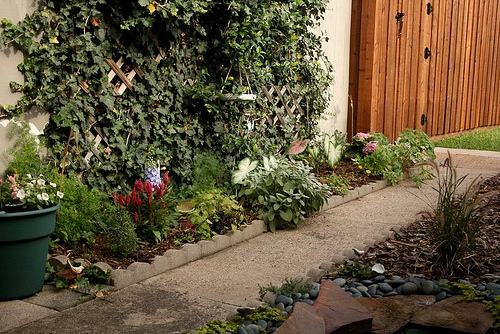
In my opinion, the foundation of any good kitchen is the tools and supplies you have on hand that find their way into all the cooking that you do. This includes knives, pots and pans, basic condiments–salt, pepper, garlic, ginger, ketchup, mustard, mayonnaise–and the basic ingredients you use on a regular basis.
This includes, of course, herbs and spices.
Spices I will leave for another discussion, but what I’m about here is herbs. The ones you use all the time, and maybe don’t even think about until either a recipe calls for a teaspoon of dried cilantro or dill or oregano, you reach for the little bottle in the cupboard by the stove and there’s not enough for the recipe. Do you know where your thyme came from? Your oregano? Your sage? Did they ride in a truck for hours? How many gallons of diesel fuel did they use? Were there pesticides on them? Were they washed? What do you really know?
I say, grow your own. Many of you probably do, and if so, you know that there’s not much better than whipping up a quick mushroom and cheese omelette and snipping a few chives to complete the dish. Homemade marinara with fresh parsley and basil? A snap, and so much better than store-bought.
Growing your own herbs is: a) simple; b) cheap; c) delicious; d) interesting–there are so many varieties of herbs to try, just sticking to the basics; we’ve grown three or four different basils and at least three different thymes; and e) rewarding–both in the sense of pride you feel from adding homegrown ingredients to your food, and for the compliments you’re likely to get from company who don’t know why that red sauce tastes better, but it does.
People who do their own herbs do it in all kinds of ways–herb-garden window boxes, and setting up a section of their vegetable garden are common. We grow ours in pots outside our kitchen door. A little water every day or two in the summer–not too much, herbs like to be a bit on the dry side– and a little advance planning, and you won’t be buying expensive little bottles of herbs at the grocery store any more. Where do those herbs come from anyway?
Grow any herbs you like, most will flourish here and where you live if you provide just a little bit of care. The real trick to successful herb gardens is to harvest often. Don’t let the herb plants get too big. Like any other plant, the more you prune the bigger the plant will get, so prune them often. Cut herb plants back frequently–usually when they outgrow the perimeter of the pot or when they look just a little out of control in the garden. Cut a large bunch, tie them up with string and hang them in a warm, dry, dark place–I do it in my garage–and forget about them for about three or four weeks. When they are dry to the touch and crumble easily, place the dried bunch in a large steel mixing bowl and crumble them to bits. Pick out and discard the stems and pour the dried leaves into nice little herb bottles you got at the dollar store or saved from when you ran out of thyme (get it?).
We grow thyme, oregano, basil, parsley, sage, cilantro, chives, and mint (actually, our mint is out of control in the backyard, but it grows really well in pots). We harvest them for dried herbs to use in the winter, but here’s an added bonus: if you grow them in small pots, bring them into the house in the fall and keep them as house plants and keep harvesting. What I’ve discovered, however, is that in spite of recommendations to the contrary, most herbs overwinter very nicely in a garage. Simply put the pots on a shelf in a cold (but not freezing) garage, near a window if you have one, give them a little water about once every two weeks, and in the spring after the freeze is gone, most of them will come back, usually even stronger. I haven’t done this with basil–we use enough basil all year long that I try to keep a pot of basil growing in the kitchen– so I’m not sure how that overwinters. Or, you can just let the basil go in September, harvest a bunch just before the first freeze, and make a load of pesto, for home use or for holiday gifts.
Fresh and local. What could be better?
Vietnamese Shrimp Spring Rolls
Morgan and her mom made these incredible spring rolls the other night for company, and they were a huge hit. I thought they were every bit as good as any I have had at a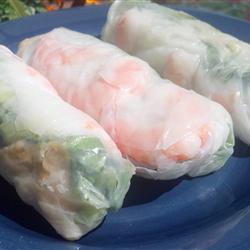 restaurant. Fact is, this is a restaurant recipe, from la Patisserie in Birmingham, Alabama, where a large Vietnamese population has resettled after the floods in New Orleans. There is a wonderful video that accompanies this recipe, for which I will post the link at the end of this recipe. Try these. You will need to find a good Asian market to get the rice wrappers, but if you haven’t found one already, you owe it to yourself to find one. Now. The one near us is wonderful, and always smells great. Very nice people, too.
Shrimp Spring Rolls
Ingredients:
1/4 cup rice wine vinegar
1/4 cup fish sauce
2 tablespoons white sugar
2 tablespoons lime juice
1 clove garlic, minced
1/4 teaspoon red pepper flakes
2 ounces rice vermicelli
24 baby shrimp, peeled and deveined
6 rice wrappers (8.5 inch diameter)
3 leaves lettuce, chopped
4 tablespoons finely chopped fresh mint leaves
4 tablespoons finely chopped cilantro
4 teaspoons finely chopped Thai basil
- Whisk vinegar, fish sauce, sugar, lime juice, garlic, and red pepper flakes together in a small bowl. Set the dipping sauce aside.
- Fill a large bowl with room temperature water. Add rice vermicelli and soak for 1 hour.
- Bring a large pot of water to a boil. Drop in shrimp and cook until curled and pink, about 1 minute. Remove the shrimp and drain. Or you can buy precooked baby shrimp with the tails on. Defrost and pinch off the tails. Transfer rice vermicelli noodles to the pot of boiling water and cook for 1 minute. Remove and drain in a colander. Immediately rinse the vermicelli with cold water, stirring to separate the noodles.
- To assemble the rolls, dip 1 rice wrapper in a large bowl of room temperature water for a few seconds to soften. Place wrapper on a work surface and top with 4 shrimp halves, 1/4 of the chopped lettuce, 1/2 ounce vermicelli, and 1/4 each of the mint, cilantro, and Thai basil. Fold right and left edges of the wrapper over the ends of the filling and roll up the spring roll. Repeat with remaining wrappers and ingredients. Cut each roll in half and serve with dipping sauce.
Makes 6 spring rolls
Servings: 1 roll, 2 tablespoons dipping sauce
PP3
Vegetable Pad Thai — Weight-Watchers Style
Here is a vegetarian version of Pad Thai. It is wonderful, slightly different, and tasty nonetheless.
Ingredients:
4 oz. flat rice noodles
2 teaspoons canola oil
1 red bell pepper, cut into strips
2 large carrots, cut into matchsticks
6 scallions, thinly sliced
2 Thai chili peppers or 2 teaspoons Asian red garlic-chili paste
2 cloves fresh garlic, minced fine
2 tablespoons fish sauce
1 tablespoon dark brown sugar, packed
1 tablespoon reduced-sodium soy sauce
1 cup fresh bean sprouts
1/2 container extra-firm tofu, cut into 1-inch cubes
1/2 cup fresh cilantro, chopped and divided
2 tablespoons unsalted peanuts, coarsely chopped
Preparation:
1. Place noodles in a large bowl and cover with hot water; let stand until noodles are soft, about 20 minutes. Drain, rinse with cold water, and drain again.
2. Heat oil in a wok or large skillet over medium-high heat. Add bell pepper, carrots, scallions, chili peppers, and garlic, and stir fry until the vegetables are soft, about 3 minutes. Add fish sauce, brown sugar, and soy sauce, stir fry until the sugar dissolves, about 30 seconds. Add noodles, sprouts, half the cilantro, and tofu. Toss gently to mix all the ingredients and coat everything with sauce and heated through, 2-3 minutes. Remove from heat to a serving bowl and sprinkle with remaining cilantro and peanuts.
Serve either hot or at room temperature.
Serves 6
Serving: 1 cup
PP4
Chicken Pad Thai–Weight-Watchers Style
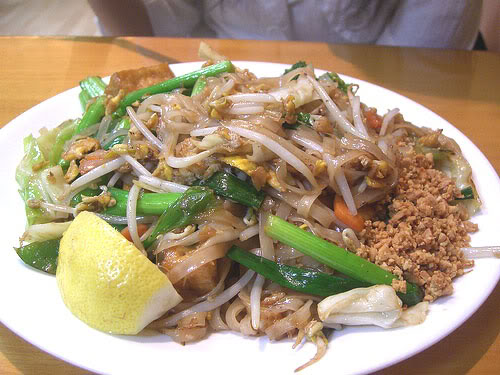
I have a weakness for Asian dishes, and I’m always looking to learn new ones. Perhaps my all-time favorite Asian recipe is Pad Thai. I can’t get enough of this dish, but traditionally, made in Thai restaurants, the calorie count is measured in the billions. Having recently joined Weight Watchers, I now have to “skinny down” some of my faves. What I’ll present here is an absolutely wonderful rendering of this Thai favorite, but beaten into submission. This low calorie version has everything you could ask for in this dish, and yet has a much better PointsPlus value than traditional chicken Pad Thai recipes. It’s a great healthy meal idea to help satisfy your craving for Thai food, while still keeping you on track with Weight Watchers.
Pad Thai with Chicken
Ingredients:
6 oz chicken skinless, boneless chicken breast, chopped into bite size pieces
4 oz dried rice noodles
1/4 cup egg beaters
2 cups bean sprouts
1/2 cup sliced scallions
1/4 cup shallots, minced
4 cloves garlic, minced
4 tbsp rice vinegar
2 tsp peanut oil
1 tsp salt
2 1/2 tablespoons fish sauce
2 tbsp chopped dry-roasted peanuts
2 tbsp fresh cilantro, finely chopped
1 tbsp sugar
1 1/2 tsp chili-garlic sauce
Instructions
1. In a large bowl, soak rice noodles in warm water until they are limp and white, about 30 minutes.
2. Heat oil over high heat in a wok until very hot. Add the shallots and garlic and stir-fry until golden, about 10 seconds.
3. Add the egg and cook, stirring, until scrambled, about 30 seconds. Add chicken and stir-fry until mostly cooked through, about 5 minutes.
4. Drain the noodles and add to the wok, tossing with tongs until they soften and curl, about 1 minute.
Add bean sprouts, cilantro, scallions, vinegar, fish sauce, sugar , salt and chile-garlic sauce; toss until the chicken is fully cooked and noodles are heated through, 1 to 2 minutes.
Sprinkle with peanuts and serve immediately.
Cooking time (duration): 45
Serving size: 1 cup
Serves 4
PP 7
Chinese-Style Scallops At the Beach — Lancaster Online
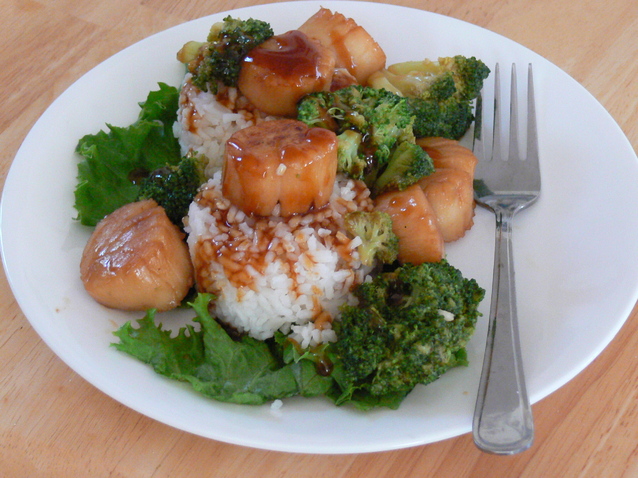
We’ve been driving all day to the beach in Virginia. It’s hot down here — 100 degrees some places on the mainland, and a relatively cool 92 degrees out at the beach. It’s too hot to spend a lot of time slaving over a hot stove, and besides, kids are chomping for some beachy takeout.
Because most of the takeout here consists of deep-fried seafoods, I figure we need to find another alternative on our first day at the beach.
“Chinese!” says one. “Yeah,” hollers the other. “Chinese!”
“At the beach?” I ask. “Really?”
I’m sort of relieved to discover that there is only one Chinese takeout place in this quiet little beach village, and we’ve learned that it isn’t particularly good.
But wait! I have another idea: How about if I whip up something yummy out of what we find here in town?
The idea is met with some skepticism.
Undaunted, I head out to the seafood market down the street from our little rental cottage to see what I can find, and what luck! Big, beautiful sea scallops, the size of ping-pong balls, which were brought in on a boat that day. Both kids really like scallops, which we often broil or sauté with browned butter, lemon juice and garlic.
But the kids wanted Chinese, so I think I’ll give them what they want. I pick up a couple of Asian ingredients from the local market, a piece of fresh ginger and some scallions and voila! It’s a tasty, sweet and spicy Chinese takeout dish, General Tso’s scallops, made with fresh, locally caught sea scallops and some locally grown broccoli.
Sea scallops are a tasty, different kind of seafood, and if you haven’t tried them, I highly recommend you do so. Mr. Bill’s Fresh Seafood on Harrisburg Pike carries some of the nicest, freshest sea scallops around, and the proprietor, Tim Glatfelter, or a member of the staff there will gladly provide you with some terrific tips and advice on cooking them in various delicious ways.
You can also make this dish with shrimp, chicken or beef, but you need to try it.
GENERAL TSO’S SCALLOPS
1 pound sea scallops, washed, drained and dried
1/2 cup rice wine, separated into two 1/4-cup measures
4 teaspoons oyster sauce
4 teaspoons cornstarch
1 tablespoon rice wine vinegar
2 teaspoons granulated sugar
1 teaspoon Chinese chili-garlic sauce
4 teaspoons peanut oil
1 tablespoon peeled fresh ginger, finely grated
2 scallions, chopped
2 cups broccoli florets, cut into bite-sized pieces
Combine scallops, 2 tablespoons rice wine, 2 teaspoons oyster sauce and 3 teaspoons cornstarch in a medium mixing bowl; toss to coat. Combine vinegar, sugar, chili-garlic sauce and remaining rice wine from the first 1/4-cup measure, oyster sauce and cornstarch in a separate bowl.
Heat 2 teaspoons oil in a wok or large nonstick skillet over medium heat until smoking. Add half of the scallops and cook until browned, about 2 minutes per side; transfer to a warm plate. Add 1 teaspoon of oil to the skillet and repeat with remaining scallops.
Wipe the skillet with paper towels and return to heat. Add remaining oil and the ginger and scallions and stir-fry until fragrant, about 30 seconds. Add the second 1/4 cup of wine and the broccoli florets to the skillet; reduce the heat to low, cover and simmer for 3 minutes. Add the cooked scallops and the ingredients from the second bowl back to the skillet and stir-fry, cooking and stirring constantly until the sauce thickens and the scallops are cooked through, about 2 minutes.
Serve immediately beside a 1/2 cup of white steamed rice.
And if you want to spice it up a bit, add two or three Asian dried red chilies just before you add the ginger and the scallions, and stir-fry them until they turn black, then proceed as directed.
Email Jeff Thal at talking.fresh@yahoo.com or visit his blog, talkingfresh.typepad.com/blog.
 Cheffzilla’s Kitchen